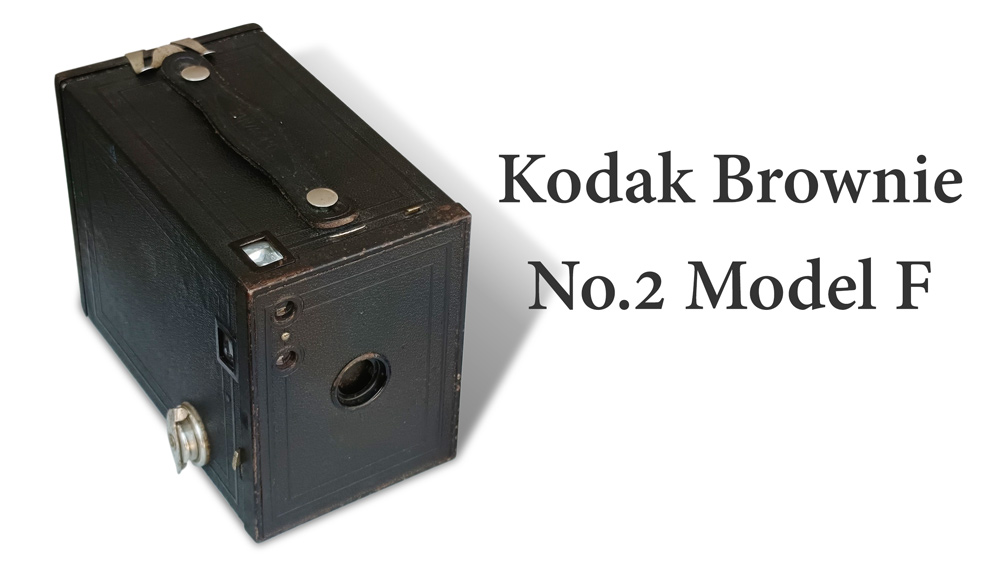
Kodak No. 2 Brownie Model F (1924) : The Classic Box Camera That Changed Photography History
When discussing vintage box cameras that revolutionized access to everyday photography, the Kodak No. 2 Brownie Model F stands as a major landmark in photographic history. The Model F iteration was first introduced around 1924 by the Eastman Kodak Co. in Rochester, New York, USA.
Highlights & Exterior Design
-
Durable Aluminum Body: The Model F represented a major upgrade over its predecessors, replacing the internal wooden and cardboard frame with a sturdy yet lightweight aluminum chassis. It is finished with a handsome, classic black faux-leather wrap.
-
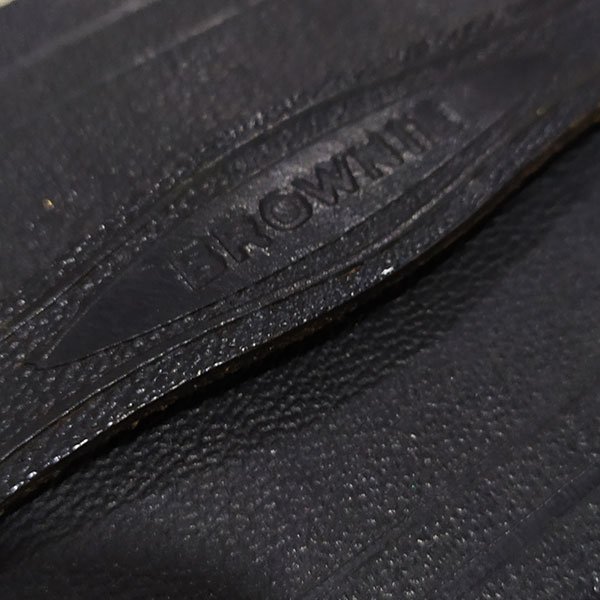
Embossed Leather Strap: The top carrying handle is made of real leather, embossed with the iconic "BROWNIE" logo in bold lettering, and secured with round metal rivets.
-
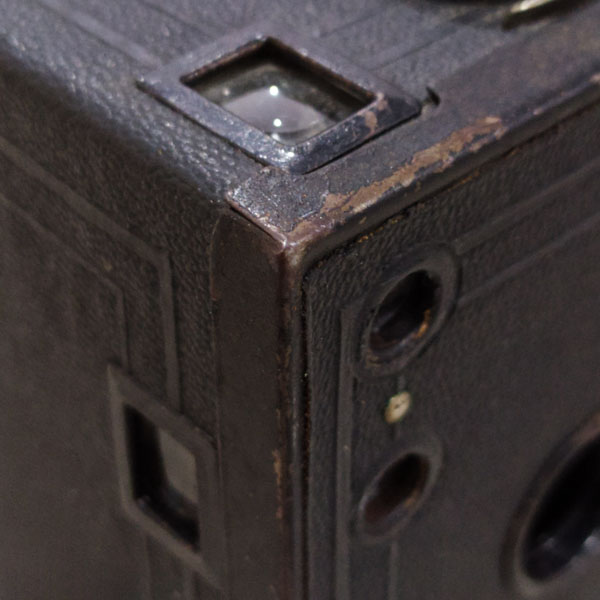
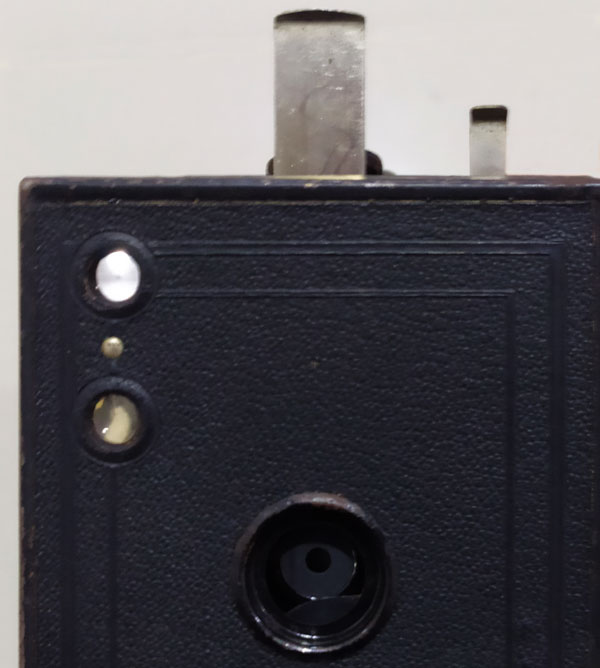
Dual Viewfinders: Features two waist-level reflective viewfinders — one on top for portrait (vertical) orientation, and one on the side for landscape (horizontal) shots.
Mechanics & Operation
True to its era's philosophy of simple, accessible operation, the controls are wonderfully straightforward:
-
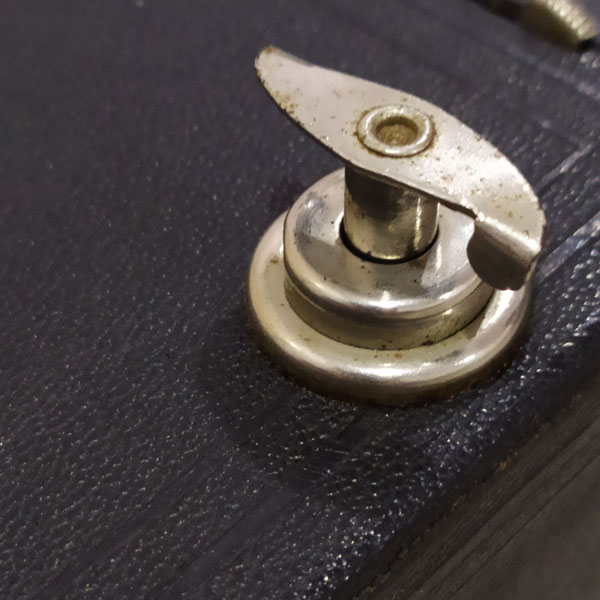
Shutter Lever: A simple flip-up / flip-down lever on the side fires the shutter.
-
Aperture & Mode Tab: Pulling the metal tab at the top allows you to select different aperture sizes or switch to Time Exposure (B) mode.
-
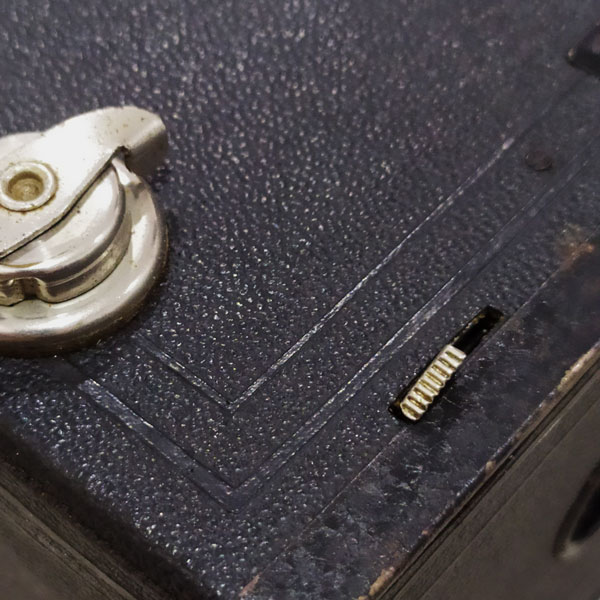
Winding Key: A nickel-plated aluminum wing-nut key on the side turns smoothly to advance the film to the next frame.
Film Format & Internal Construction
-
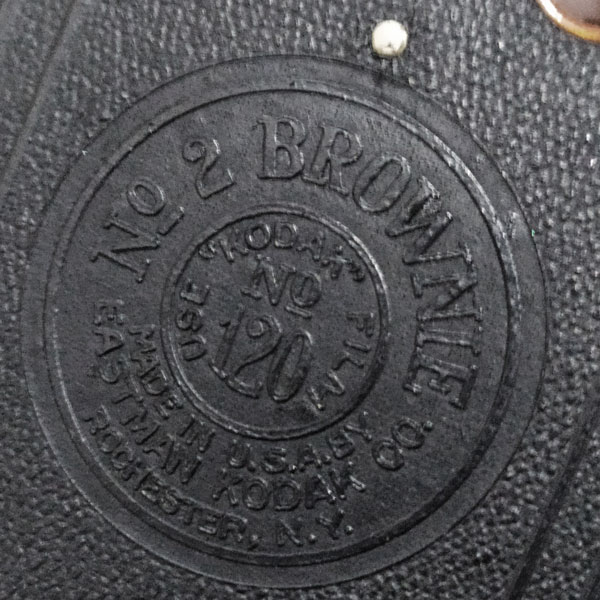
Film Type: Uses 120 format film (clearly stamped on the camera casing as USE KODAK NO. 120 FILM), producing large, crisp 2¼ x 3¼ inch (6x9 cm) negatives.
-
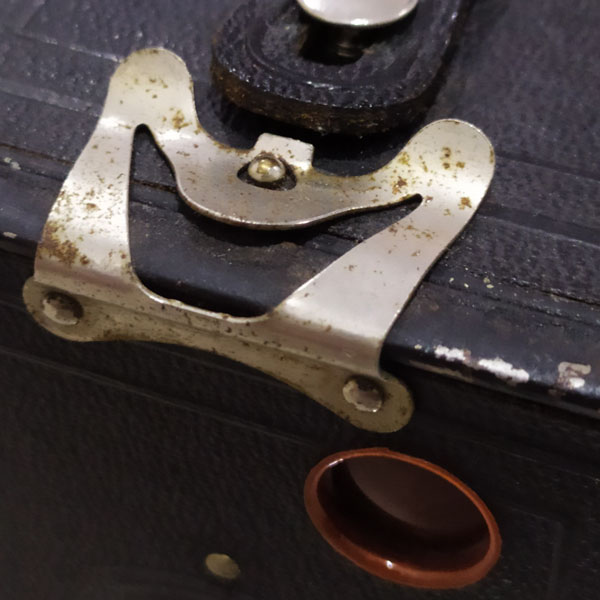
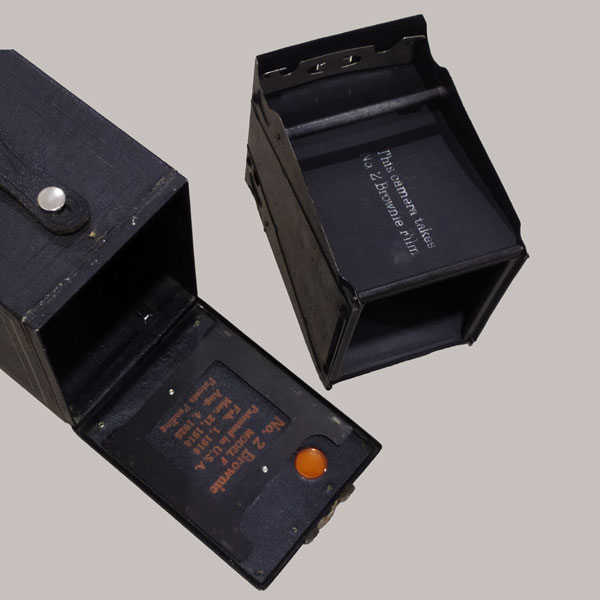
Red Window: Located on the back door, this orange/red gel window lets you view frame numbers on the paper backing of 120 film without exposing the film to light.
-
Patent Plate: Opening the back door reveals an inscribed plate reading No. 2 Brownie MODEL F, along with patent dates ranging from 1916 through 1925.
-
All-Metal Film Cone: The internal film transport mechanism is a black aluminum frame featuring a vintage warning stamped directly onto the plate: "This camera takes No. 2 Brownie film."
Collector's Summary
The Kodak No. 2 Brownie Model F is not only an item of significant historical value, but its reliance on standard 120 film means it remains fully usable today — easily bought, developed, and scanned, unlike many ancient cameras that used obsolete film sizes. For anyone starting a vintage 1920s camera collection, this is a must-have foundational piece!
After Kodak had success with the Kodak Brownie No.1 camera, which came with film loaded with 100 pictures, with the campaign "You Press the Button, We Do the Rest" - meaning the photographer just had to press the shutter button and send it to the company to develop and print the pictures, and send it back with the camera loaded with new film - Kodak released a new model of camera that was just as easy to use, with some additional functions - and the user could change the film and develop it themselves. This was the second model.
This Kodak Brownie No.2 box camera was first used around 1901-1935. There were 6 models in total: Model A - Model E. It was the first camera to use 120 roll film. The camera shown here is the Model F ...
Kodak Brownie No.2 Model F Produced in 1924, towards the end of the Model A-E's production cycle, the camera was still made of cardboard, but the Model F had a metal case, making it more durable. It had both a vertical and horizontal viewfinder, and two pull-out tabs at the top.
Kodak Brownie No2 Model F Viewfinder
The viewfinder can be viewed both vertically and horizontally.
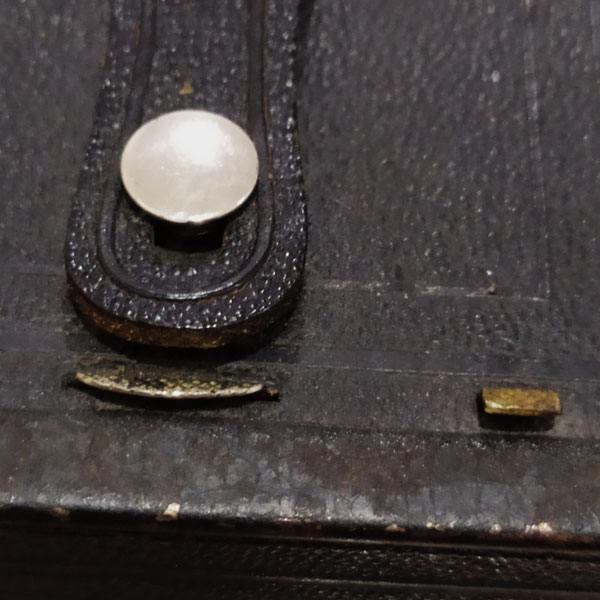 Kodak Brownie No2 Model F Top
The top lever to the left from the picture (large) is the aperture change lever.
The right (small) is the shutter speed change lever between 1/50 sec. and Time.
Use by holding and pulling up.
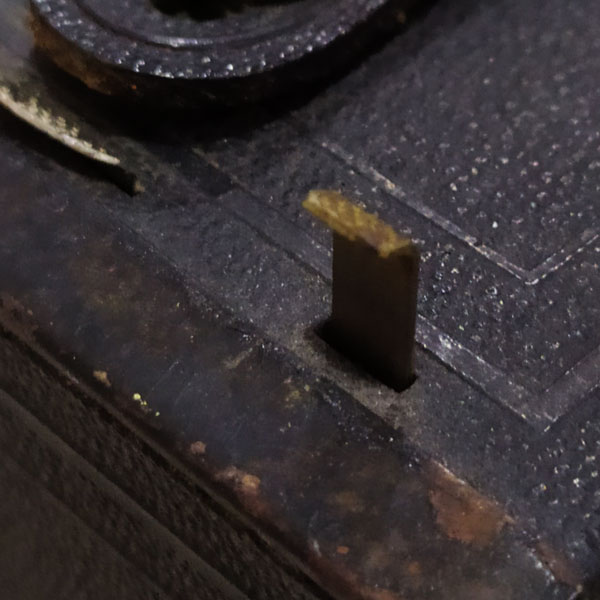 Kodak Brownie No2 Model F Shutter Lever
Shutter speed lever between approximately 1/50 and Time
Pull up the lever to use the time shutter.
The shutter release is located on the right side of the camera near the front.
Shutter Release: Press Up or Down in both directions.
Shutter 1/50 seconds Press once Up or Down, do not press again, it will be a double image.
Time Shutter: Press once to open the shutter curtain, press once again to close the shutter curtain.
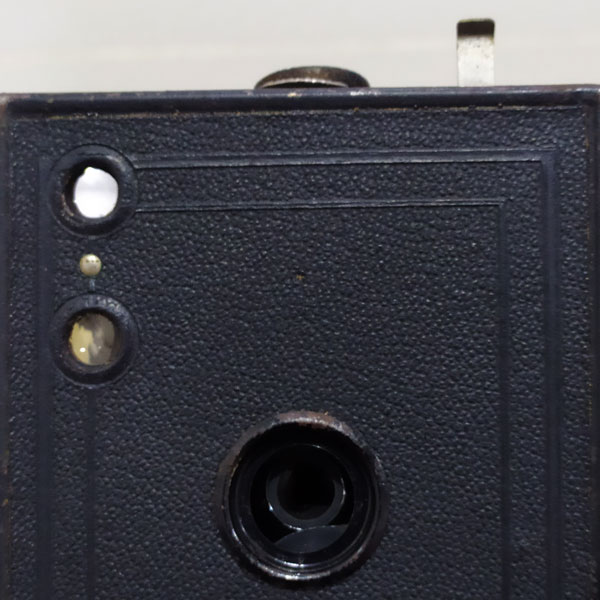
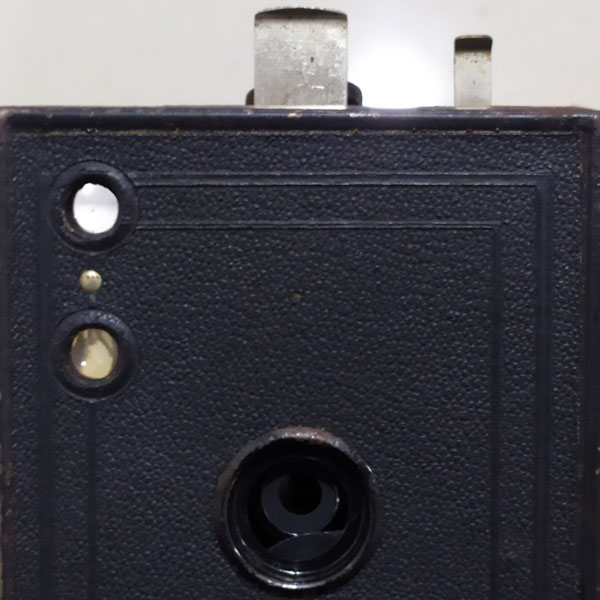
Pull up the aperture lever one step at a time.
Another lever can be pulled to change the aperture to three types: f/11, f/22 and f/32.
The lens is a Meniscus type with a focal length of 100mm and a minimum focus distance of 3 meters or 10 feet.
Using 120 film, you will get 8 photos of approximately 6x9 cm.
The back cover lock and back cover are embossed with various details and indicate that it can be used with 120 film.
Open the back cover and turn and pull out the film spool control dial before pulling out the film loader.
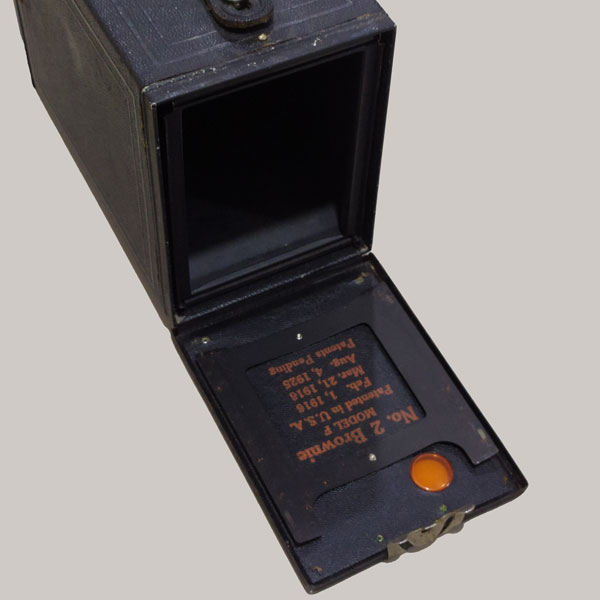
Open the back cover and pull out the film loader
Photography in those days, before cameras used roll film, most cameras used wet plate or dry plate and had many adjustment functions, such as shutter speed, aperture, etc. Professional-grade cameras were expensive due to the difficulty of production. There were many tools required to develop the film and print the photos, so the costs were high. It was difficult for ordinary people to take photos by themselves.
Kodak’s idea at that time was to produce a camera for the general public. They could buy a camera and use it easily without having to set up much. They could develop the film themselves and print the photos themselves easily. The easiest way to print photos was to use contact printing, which allowed them to see the photos they wanted without using any enlargement equipment. This led to the production of this camera at an affordable price. It was a camera suitable for the general public who had never studied, trained, or had any knowledge of photography before. It was easy to use and became widely popular. When the public could take photos and print their own photos, in addition to the income from selling the camera, the film, photo paper, and various chemicals also greatly increased Kodak’s income.
For using a camera like this today, it may not be convenient and cannot take pictures in all lighting conditions as desired as many new cameras because the shutter speed has only one value, which is 1/50 second (and it is not fixed, depending on the age of use). There are only 3 aperture values to choose from: f/11, f/22 and f/32. If we compare it to EV with ISO 100 film, shutter speed 1/50 sec. and lens length 100mm, the values obtained are as follows:
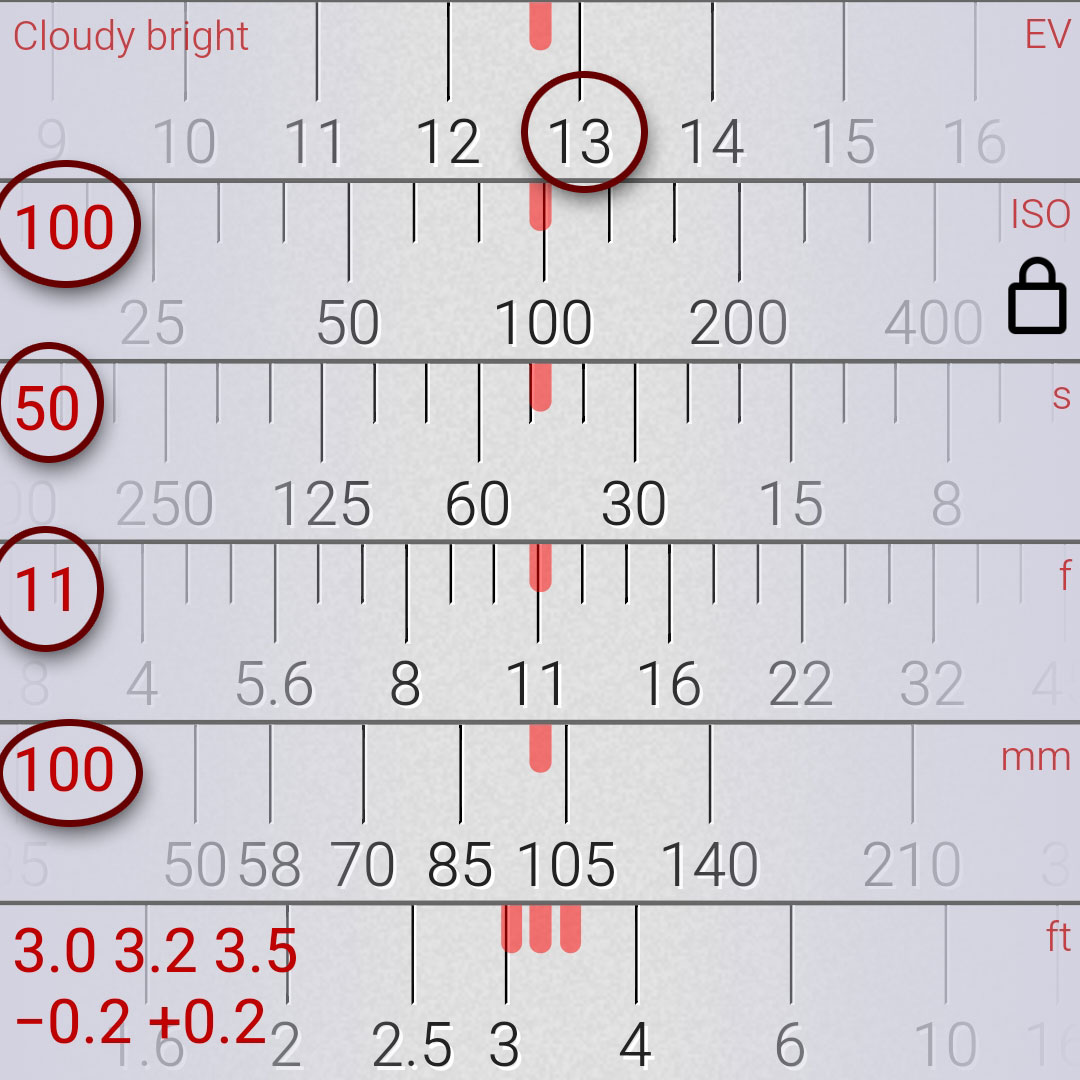
f/11 = 13 EV Cloudy bright
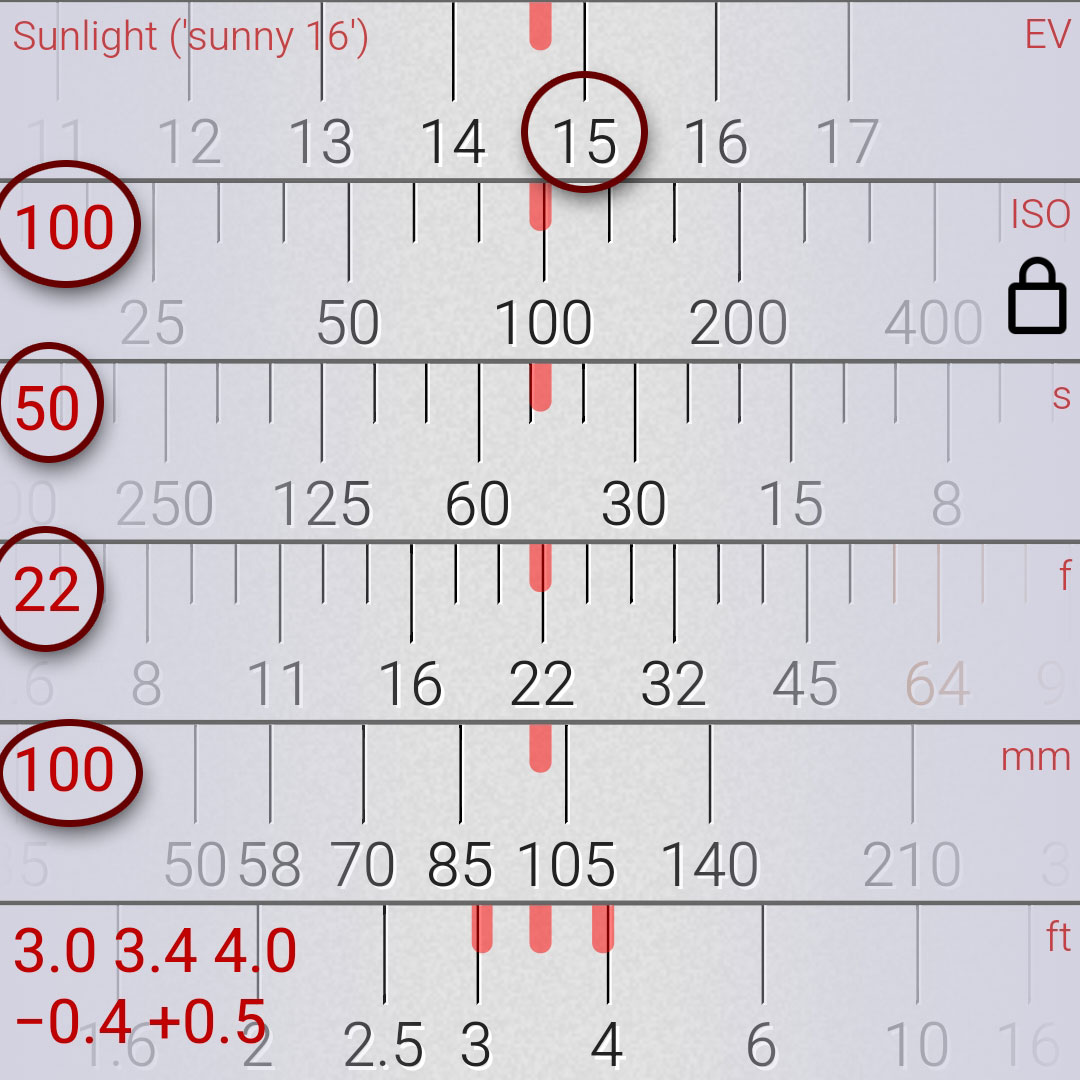
f/22 = 15 EV Sunlight (Sunny 16)
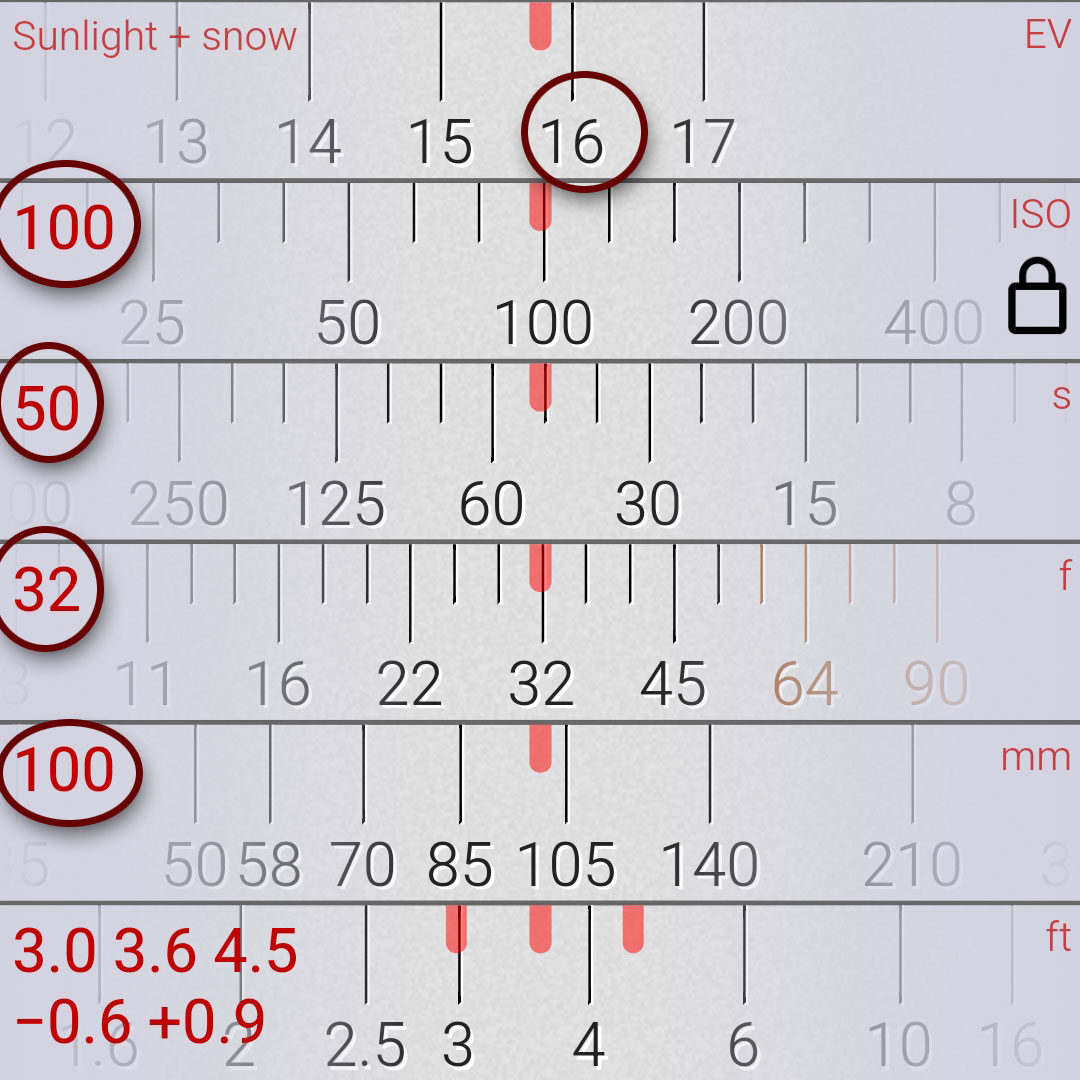
f/32 = 16 EV Sunlight + snow
If compared to the Sunny 16 rule, it will be around 15 EV (ISO100 : 1/100 : f/16)
This means that this camera must take pictures at least in the shade with sunlight, and in very bright sunlight to get good pictures. Indoors or in a room, you must use a Time mode. Kodak itself recommends taking pictures with a box camera like this "2 hours after sunrise and 2 hours before sunset" (around 9 am to 4 pm) to get good pictures. And a slow shutter speed of 1/50 sec. with a lens focal length of 100 mm. (meaning the distance from the lens to the film plane), if you don't hold it still, the camera will shake, and the picture will be blurred for sure. Therefore, this camera has a tripod mount or a screw hole for attaching a tripod base.
Another observation, 100mm lens with 6x9mm film has a small depth of field. I think it is made for taking pictures of people or objects. It is not suitable for taking pictures of landscapes that require sharpness and high depth of field.
f11 = 3-3.5 feet (focus at 3.2 feet)
f22 = 3-4 feet (focus at 3.4 feet)
f32 = 3-4.5 feet (focus at 3.6 feet)
**This distance is not certain whether it is correct or not because I haven't checked it yet.**
Review & Test Shoot: Kodak Brownie No. 2 Model F — The Timeless Charm of 1920s Black & White Photography Today
Having explored the design and history of this century-old classic, let's take a look at actual real-world test results. These sample images demonstrate the distinct aesthetic and atmosphere this simple box camera can produce when paired with the right film stock and developer.

Kodak Brownie No. 2 Model F
Kentmere Pan 100 film
Shot in the shade in front of a building with sunlight, it looks good. The last picture in the sunlight is also good. As for sharpness, I think it should be a bit more than 3 feet, 3.5-4.5 feet is OK.
Overview of Test Results
This test shot series highlights the signature visual characteristics of the No. 2 Brownie:
-
Smooth, Muted Contrast: The camera delivers soft, non-aggressive black-and-white tonal gradations. The grayscale rendering is excellent, particularly under bright sunlight where white architecture meets deep shadows.
-
Gently Soft Focus: Do not expect modern pixel-sharp edge resolution from the Brownie's single meniscus lens. However, this "soft sharpness" gives the images depth, character, and an undeniable vintage mood.
-
Natural Depth of Field: Owing to its relatively wide fixed aperture relative to its format, background elements drop into a smooth, gentle blur, helping separate the subject from the background.
-
Vintage Aesthetic: Minor film dust, imperfections, and subtle edge falloff add an authentic "time-travel" feel to the final photos.
 This photo was taken on the stairs in front of the building. The light was reflecting in at a good distance of about 4 feet.
 This picture is a little closer, so it's a little blurry.
 Come out of the building, out of the shade, into the bright sunlight, you can take pictures easily.
Technical Breakdown & Process
To achieve optimal image rendition, specific choices were made regarding film, chemicals, and technique:
1. Film Selection:
-
Film Stock: Kentmere Pan 100 (120 Medium Format)
-
Why Kentmere 100?: Kentmere Pan 100 is a fine-grained, low-speed film ideal for extracting maximum sharpness from simple vintage optics while maintaining smooth tonal transitions in bright daylight.
2. Development Process: To achieve precise contrast control and fine detail:
-
Developer: Pyrocat HD (Dilution 2:2:500)
-
Temperature: 20°C
-
Development Time: 24 minutes 30 seconds
-
Results: Pyrocat HD enhances edge acutance and controls highlights, preserving subtle midtones across the frame.
3. Shooting Technique:
-
Lighting: High-sun, bright outdoor daylight.
-
Reflections & Geometry: The test shots cleverly utilize glass reflections (as seen in the storefront images), testing how well the simple lens handles complex layers of light and detail.
-
Full-Body & Environmental Framing: In wider environmental framing, the camera maintains clear subject definition relative to background architecture and fencing.
Final Impression
Shooting with the Kodak No. 2 Brownie Model F is more than just taking pictures — it is an exercise in slow, deliberate photography. Paired with Kentmere Pan 100 developed in Pyrocat HD, the resulting images possess a rich, tactile soul that modern digital sensors simply cannot replicate.
Nowadays, we may be accustomed to or want a camera that can take pictures according to our wishes. If we try taking pictures according to the wishes of the camera, it might be fun.
Specifications : Kodak Brownie No. 2 Model F
Made in the USA
Film: Uses 120 roll film
Lens: 10 cm meniscus lens
Apertures: F11, f/22, and f/32
Shutter speed: 1/50
Minimum focus distance: 3 meters (10 feet)
Weight: 500 grams
Body: Metal covered in leatherette
Viewfinders: Two, one for portrait and one for landscape
Tripod mount: Yes
Bulb mode: Yes
Size: 5.5 in x 3 in x 4 in


Comments powered by CComment