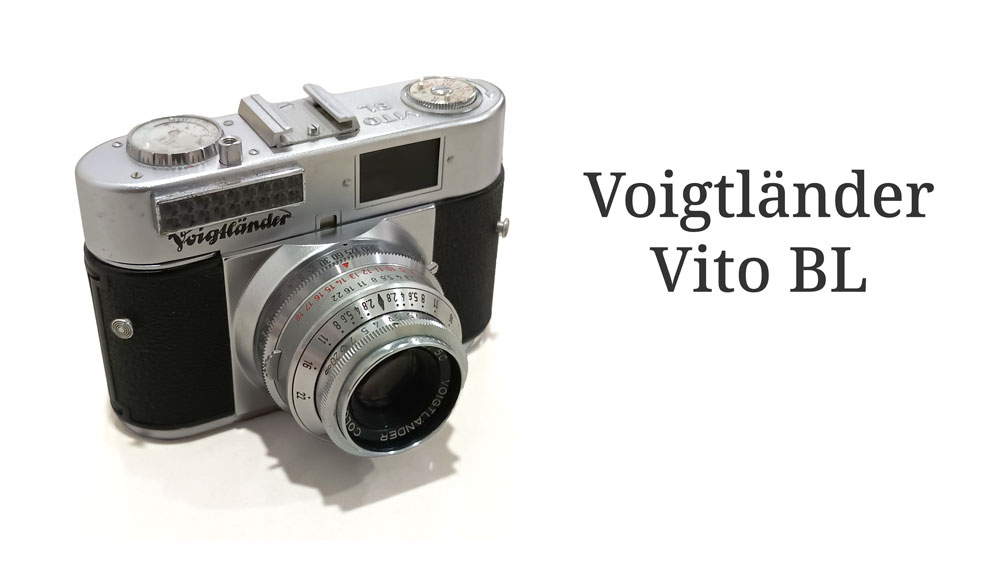
Voigtländer Vito BL (1956) – A German Classic with Built-In Light Meter
When talking about 35mm viewfinders/rangefinders from the 1950s—renowned for their durable build quality, exquisite German engineering, and sleek design—the Voigtländer Vito BL stands out as a top contender among collectors and film enthusiasts. Introduced in 1956, this model was built upon the success of the Vito series, packed with features that make it even more versatile.
Key Features & Highlights

-
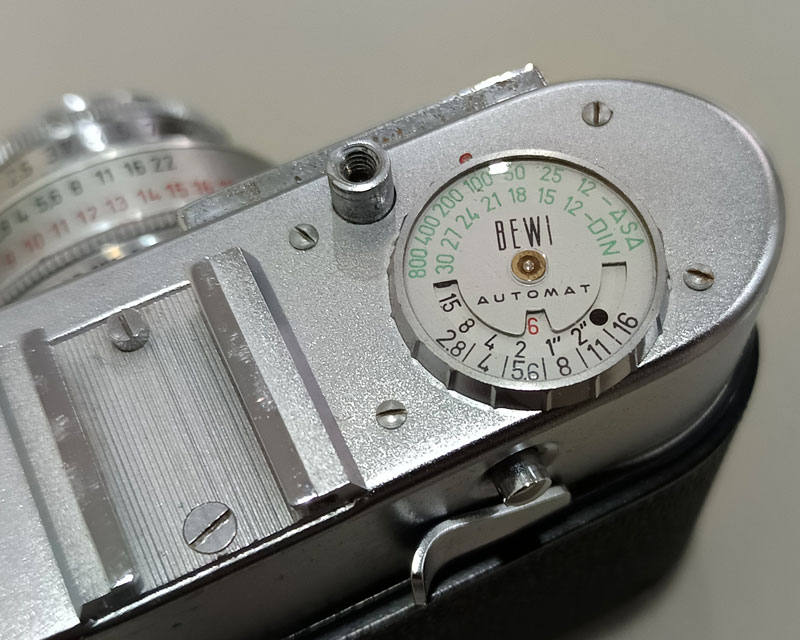
- BEWI AUTOMAT Selenium Light Meter: The "BL" in its name stands for Lightmeter. It features an integrated Selenium light meter—specifically the "BEWI AUTOMAT" module visible on the top plate. Best of all, it operates completely without batteries, powered instead by light entering through the honeycomb cell on the front panel.
-
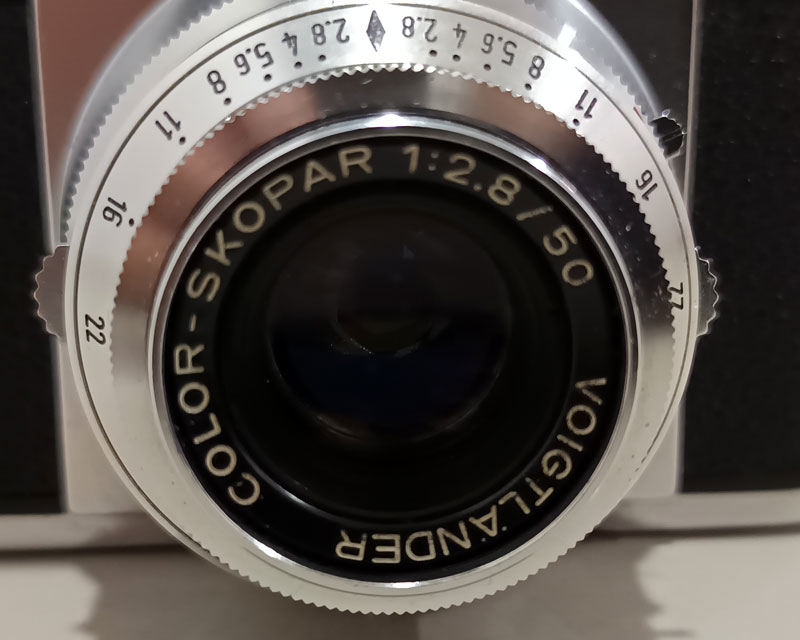
High-Performance Color-Skopar 50mm Lens: Equipped with the legendary Color-Skopar 1:2.8 / 50 (or 1:3.5) coated lens, known for delivering rich contrast, crisp sharpness, and that unmistakable vintage aesthetic.
-
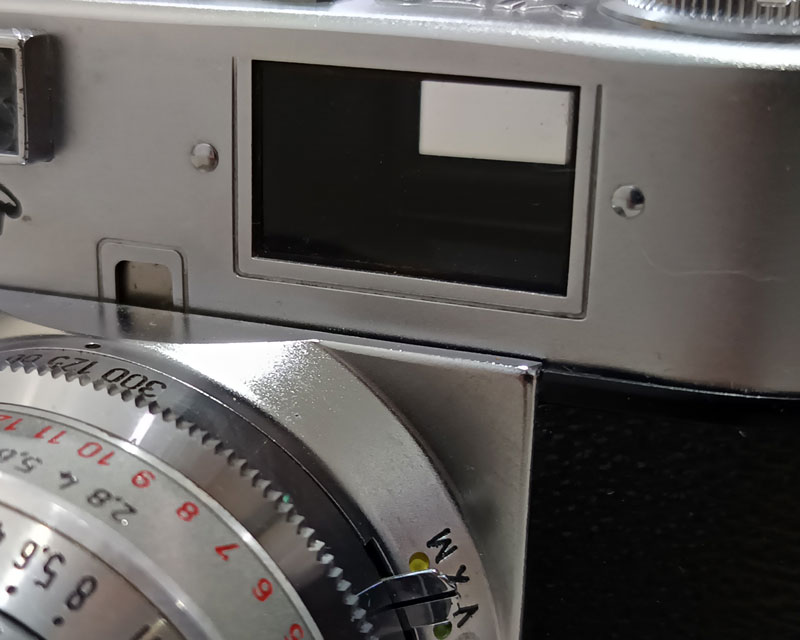
Brightline Viewfinder: A crystal-clear single viewfinder window that makes framing your shots quick and effortless.
Technical Specifications
| Feature | Specification |
| Camera Type | 35mm Viewfinder Camera |
| Production Year | Introduced in 1956 (West Germany) |
| Lens | Voigtländer Color-Skopar 50mm |
| Shutter System | Prontor-SVS or Synchro-Compur (Multiple speeds + B mode) |
| Light Meter | Battery-free Selenium Meter (BEWI AUTOMAT) |
| Focusing | Zone Focusing (Distance scale on lens ring) |
A Collector's Perspective:
This Voigtländer Vito BL is in remarkably beautiful condition. The metal body retains its shine, the leatherette is still in perfect condition, and the classic logo lettering is clearly visible. It's a masterpiece reflecting the golden age of German camera engineering, suitable both for display and for use in street photography or slow-life snapshots.
The Voigtländer Vito BL is a high-end German camera. It is in the late period when German cameras dominated the market and Japanese cameras were developing rapidly. This camera looks like a craftsman's work, with meticulously assembled parts and well-checked usage. It uses 35mm film rolls. It is compact and has a lens attached to the camera body. It cannot be changed. It was produced from 1956 to 1960. It is one of the Vito B series that started with a separate selenium light meter.
The general appearance and condition are similar to other Vito models, but there are some minor details in the production line. There are many different models and lenses. For example, this is a Color-Skopar 50mm f/2.8 lens or some models may be f/3.5 with 4 elements. There are 2 types of light meters. This one is Bewi-Automat and the other is Bertram (both are produced by Ernst & Wilhelm Bertram). There are important differences between these two types of light meters. Also, the viewfinder has various formats, with or without bright lines inside the viewfinder. Most cameras have a Prontor shutter or this one is a Prontor SVS with 9 shutter speeds from 1/300 - 1 second and B mode with EV value numbers.
The use of adjusting the aperture and shutter speed is a bit complicated, but it is not too difficult to understand. Practice often and you will be able to set the settings smoothly. The main thing is that when we have measured the EV value, adjust the aperture and shutter speed to match the EV value. The lens will then lock that value. When you rotate the lens, the aperture and shutter speed will change at the same time, maintaining the same exposure value, not getting brighter or darker.
Let's look at the appearance. And usage
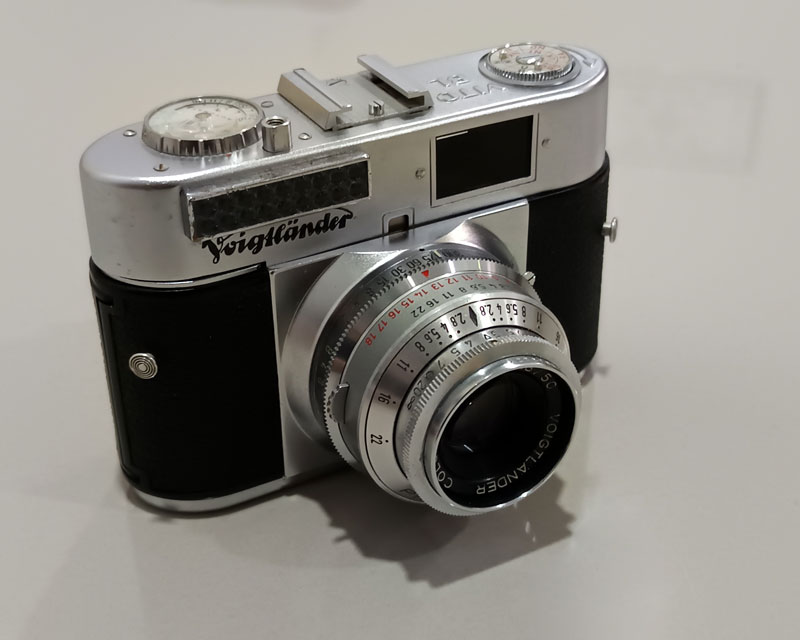

The front and back of the camera will see that the shape is quite small. The adjustment parts are on the lens.
On the top of the camera, on the right side, is the shutter release button. There is a screw hole for the shutter release cable. The large round dial is the light meter. The model seen here has a built-in light meter in the Bewi-Automat type. You have to set the sensitivity first, which is the green number, the ASA (ISO) value, or the DIN value, which is the film sensitivity value used. You can turn the dial to match the desired sensitivity value with the red dot on the front.
On the back of the camera, there is a small round button. When pressed, the light meter will work. Press and hold for 2-3 seconds and release. The light meter numbers on the dial will be displayed as shown in the picture. The red number is the EV value (this example is 6). The next number is the shutter speed value. And the lowest set of numbers is the aperture value. From the example, the light value is EV 6. If we are going to shoot at f/5.6, we must use a shutter speed of 1/2 second. Set the lens value as follows. But since the light meter is old, it may have deteriorated. Must be tested in real use. This camera has been tested and underexposed by 2 stops. In real use, the value must be adjusted to be 2 stops brighter as well.
In the center of the top of the slot is a slot for inserting a flash or a focus distance meter, etc. as desired.
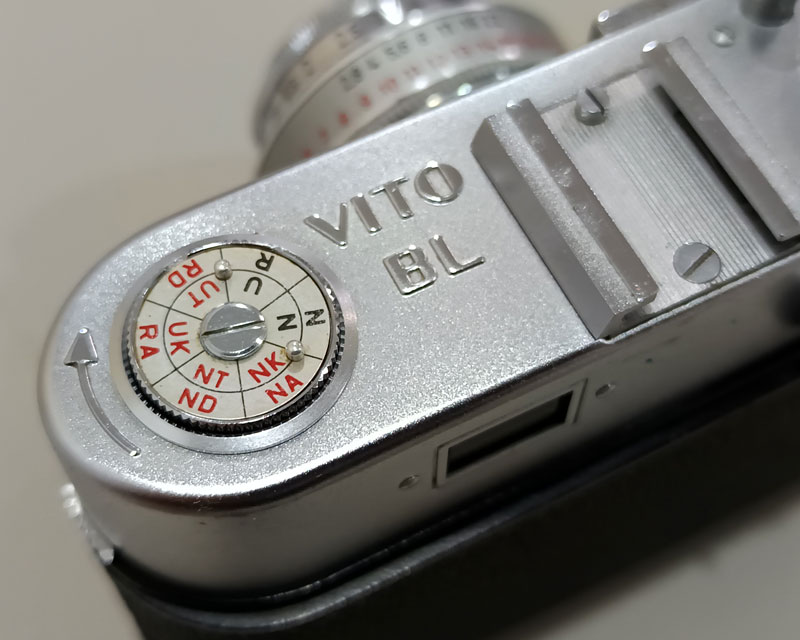
On the top left side, there will be letters indicating the VITO BL camera model, a round dial for turning the film back into the cartridge, and it is also an indicator of whether the film is moving or not. When the film is loaded to take a new picture, this dial will also turn. When all the pictures have been taken and you want to turn the film back, push the button on the side and the dial will pop up, allowing you to turn it. On the dial, there are letters to indicate the film loaded in the camera. It is the old type and cannot be used with current film anymore.
On the front right side, there will be a light receiving cell to measure the light value.
On the front left side, there is a square slot that is an image receiving channel sent to the rear viewfinder.
On the front of the Color-Skopar 50mm f/2.8 lens, on top, there are numbers indicating the depth of field.
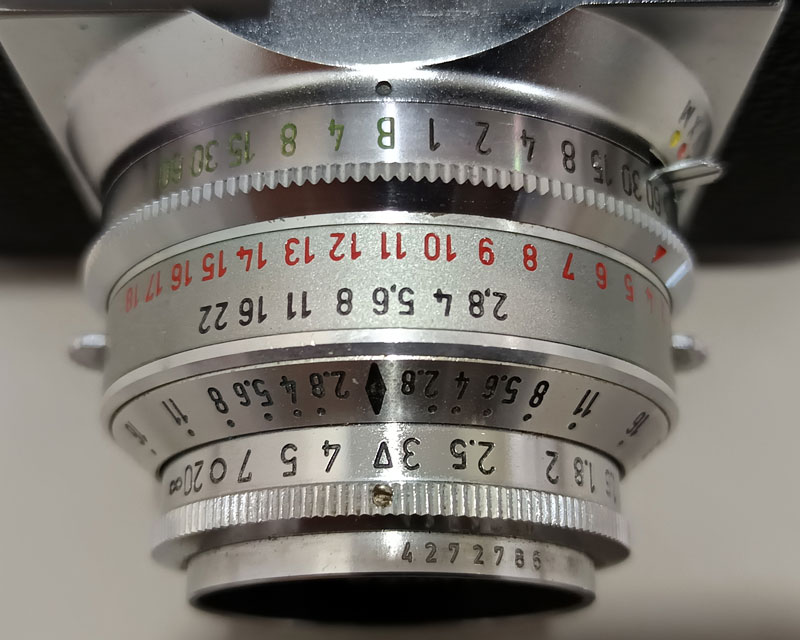
On the top of the lens, the first row of numbers indicates the focus distance. (This is displayed in meters) Next is the depth of field number. Next is the aperture value number. Turn the desired value to match the black diamond shape in front. Next is the red number, which represents the last EV value. This is the shutter speed value number. Adjust the desired shutter speed value to match the black point behind.
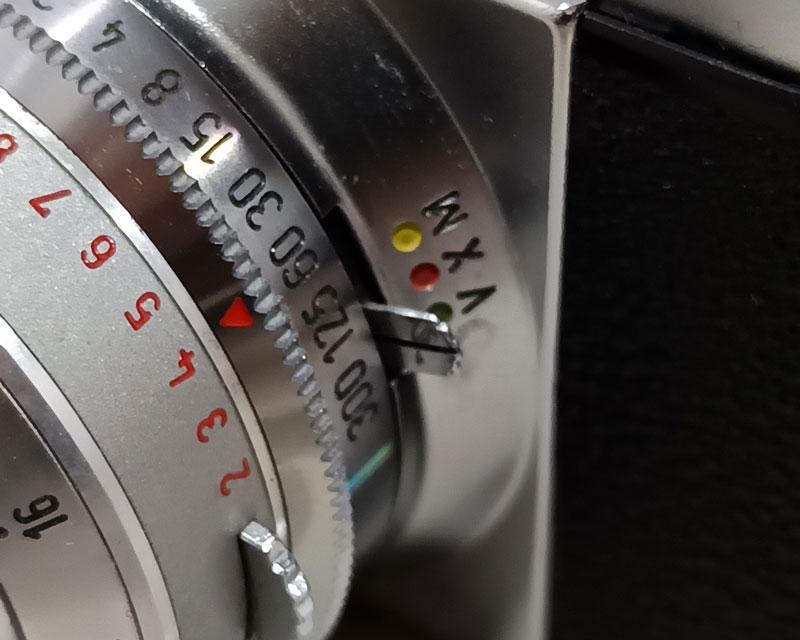
On the left side of the lens, there is a trigger for adjusting the M and X flash sync values.
M-Sync is used with old flashes that are bulb flashes. Bulb flashes are not at their brightest from the start. There will be a period of time for the flash to be at its brightest. The flash will fire before the shutter is fully open, so that there is time for the flash to be at its brightest when the shutter is fully open.
X-Sync is used with new electronic flashes. The flash is a constant brightness. The flash will fire when the shutter is fully open.
And V is a countdown timer for approximately 10 seconds.
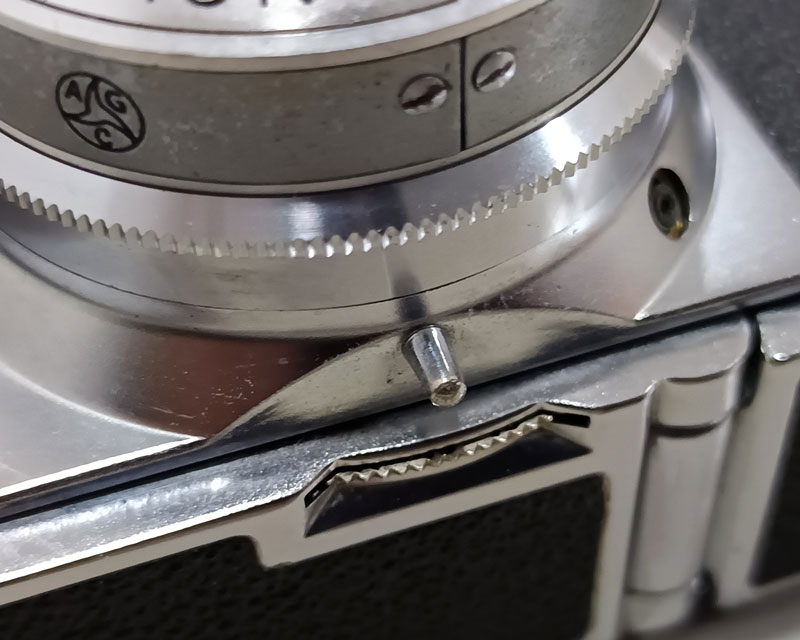
On the bottom of the lens, there is a spigot for setting the camera on a flat surface, supporting the camera so that it does not face down.
Under the camera, there is a rotating gear for setting the number of shots displayed at the top.
The black button you see on the right is the slot for connecting the flash sync cable.

Above the lens, there is a square that shows the number of shots. When you turn the gear under the front of the camera, the number of shots will be displayed in this small square.
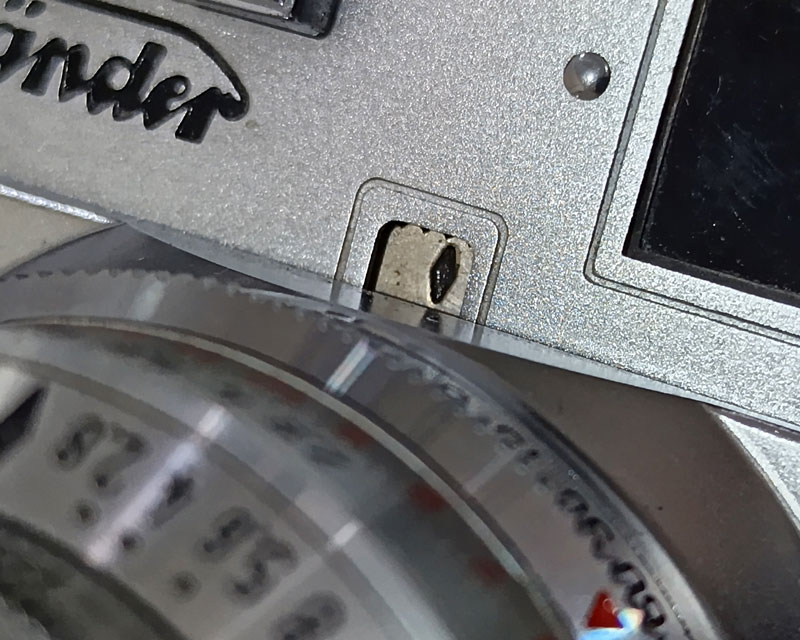
After loading the film, turn the gear under the camera until a black diamond shape appears.

Then, press the shutter, and turn the gear until it shows the number 1 (about 2 times), which means it is ready to take the first photo.

When the roll is finished, which is usually about 36 shots, the number of shots will be displayed until the last photo. You will not be able to move the trigger to advance the film again.

To wind the film back into the canister to take it out, you must first press the silver round button on top of the film advance trigger.
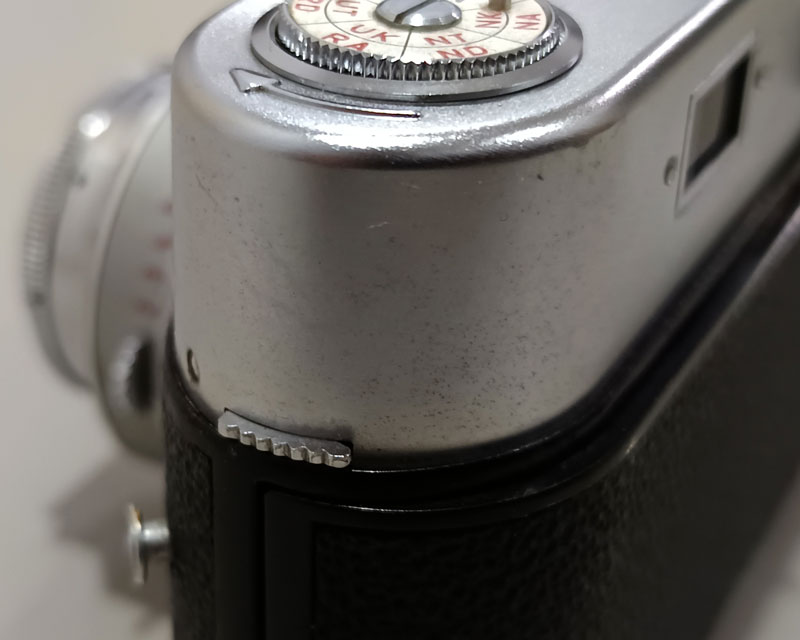
Push the trigger on the left side of the camera to make the film dial pop up.
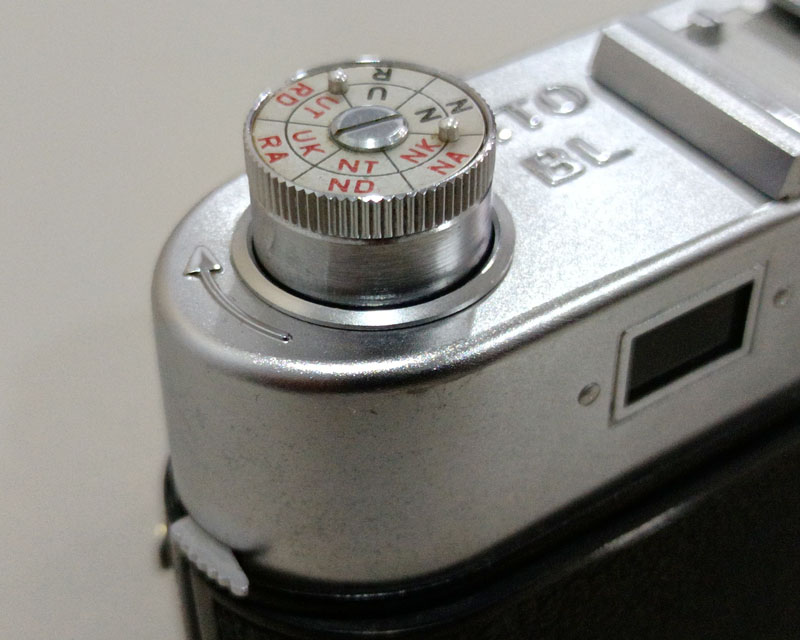
When the film dial pops up as shown in this image, you can turn the dial to put the film back into the canister.

When the film is finished winding, under the camera, in this image, there is a bottom cover release on the left side of the image.
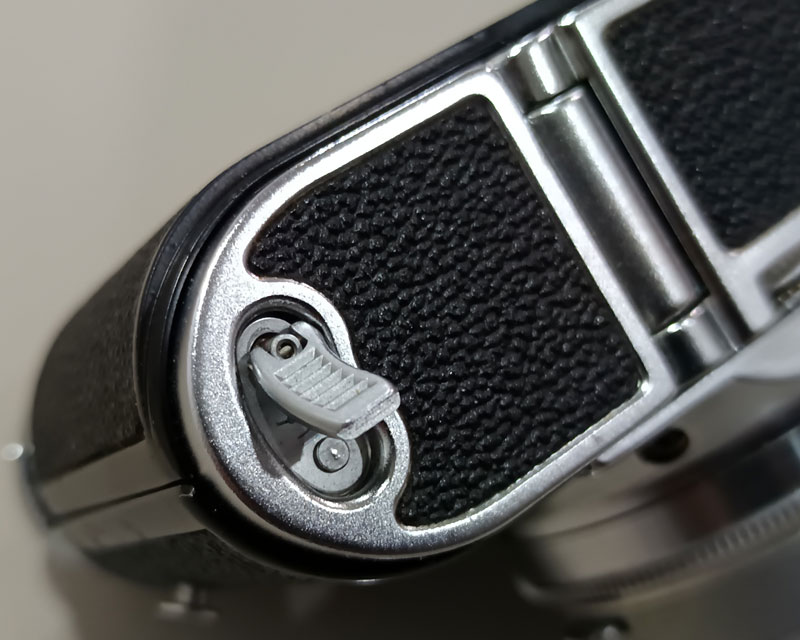
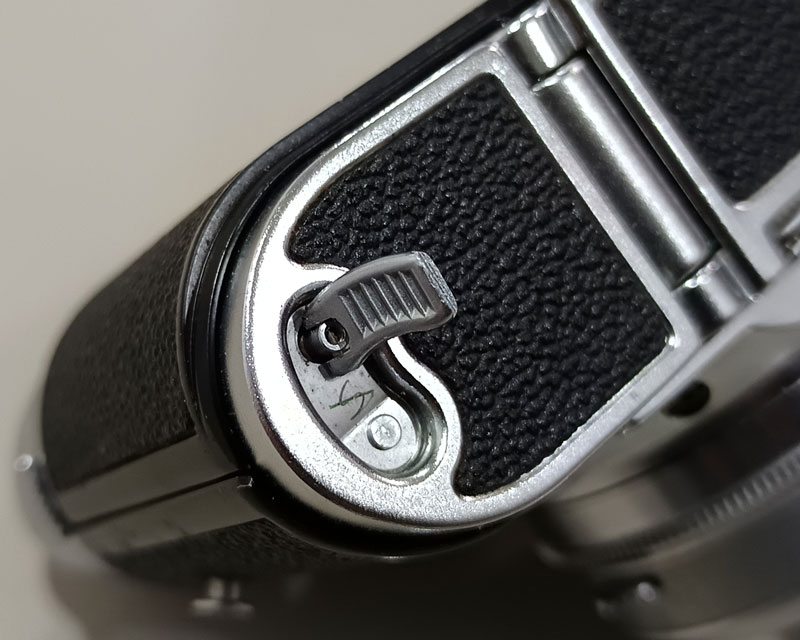

Lift the bottom cover and rotate it 90 degrees to the right, and the bottom left cover will open.
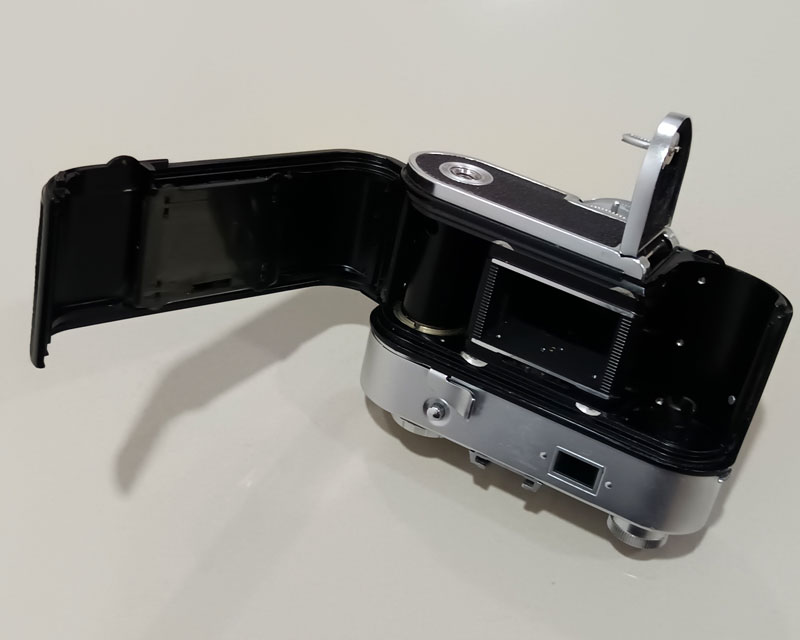
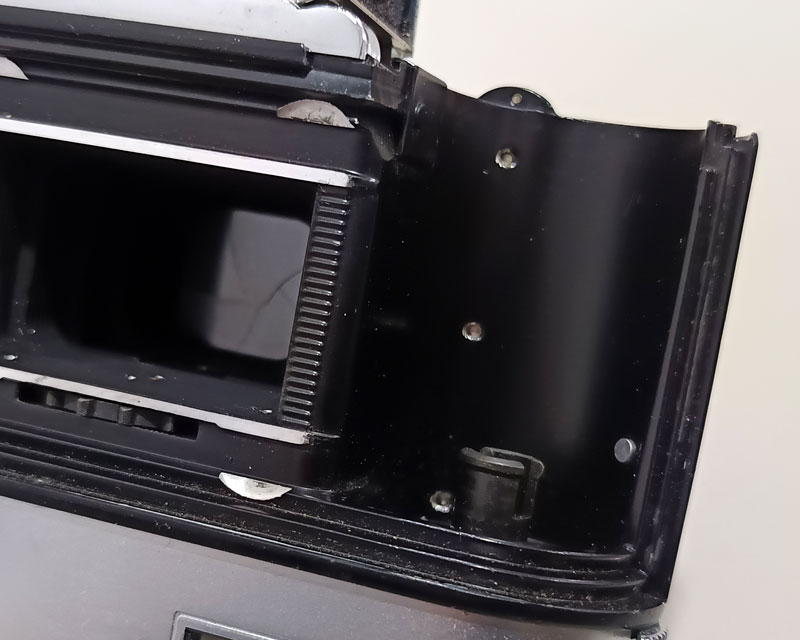
After opening the bottom cover of the camera, you can open the back cover of the camera. Then take out the film canister.


When you have a new roll of film, you can put it in. If you don't have any film, close it back.
Sample Gallery: The B&W Aesthetics of the Color-Skopar Lens
Loading a 70-year-old camera with black-and-white film yields results that go beyond simple photography—it creates timeless art. These sample images showcase just how capable this German lens truly is:
1. Architectural Details & Depth

Voigtlander Vito BL Sample Photo 001
- The Temple Entrance: Highlights the lens's excellent contrast. High-frequency decorative patterns on the pillars remain crisp and well-defined without blurring together, perfectly capturing the peaceful atmosphere of devotees praying at the center.

Voigtlander Vito BL Sample Photo 002
- The Bell Tower: Notice the intricate details on the Thai-style gables and roofline. The Color-Skopar captures complex textures effortlessly, while the light and shadow falling on the white wall below create a striking sense of depth.

Voigtlander Vito BL Sample Photo 003

Voigtlander Vito BL Sample Photo 004
2. Sharpness & Minimalist Geometry
-
Doorway & Stairs: A true test of lens distortion. The architectural lines—from the door frame to the diagonal staircase—remain remarkably straight with virtually no barrel distortion, delivering a clean, symmetrical composition.
Voigtlander Vito BL Sample Photo 006
3. Street Life & Timing
-
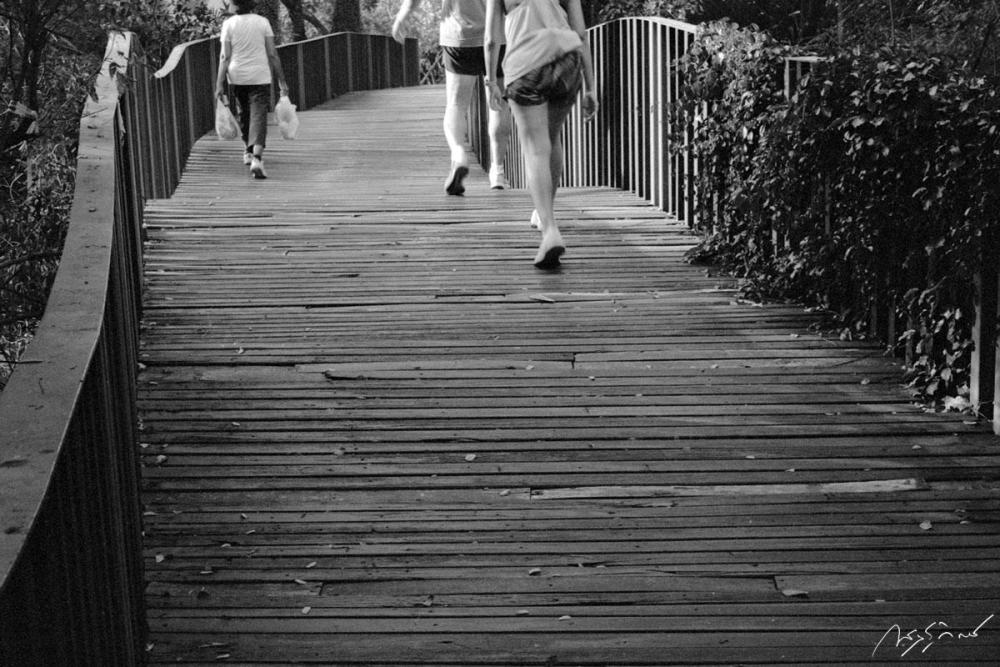
Crossing the Wooden Bridge: Since the camera relies on zone focusing, this shot demonstrates precise scale estimation. The natural movement of footsteps along the wooden planks creates strong leading lines that draw the viewer right into the scene.
Voigtlander Vito BL Sample Photo 005

Voigtlander Vito BL Sample Photo 007

Voigtlander Vito BL Sample Photo 008
4. Rich Tonal Range in Nature
-
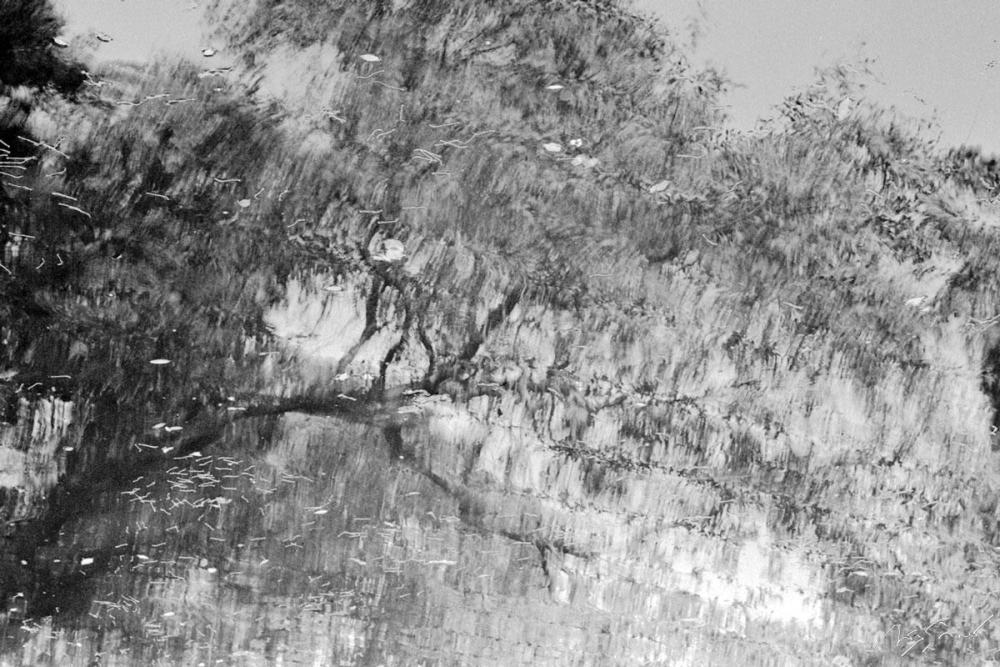
Water Reflections: Foliage and water are notoriously tough for vintage glass, but the Vito BL handles them with ease. Sunlight glittering off the leaves contrasts with deep shadows in the water, rendering a smooth, painterly transition across greyscale tones.
Collector's Verdict
"Without auto-focus or batteries, the Voigtländer Vito BL invites you to slow down. Once you master distance and light, it rewards you with photographs rich in soul—offering a signature 'soft yet sharp' rendering that modern digital cameras simply cannot replicate."


Comments powered by CComment