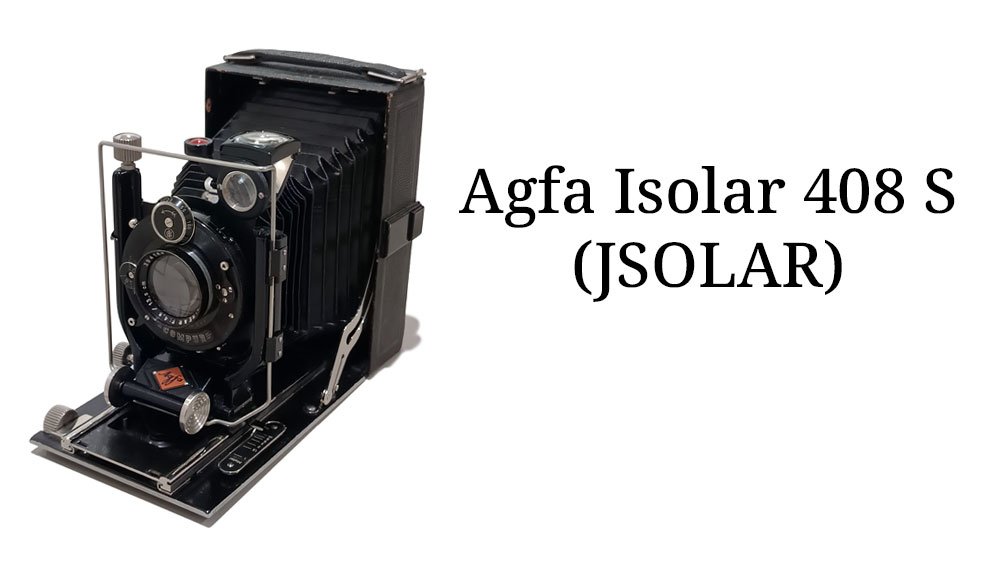
Agfa Isolar (Jsolar) 408 S
A Legendary 1920s Plate Camera: The Charm of Fine German Craftsmanship
Getting to Know the Agfa Isolar 408
Plate Cameras and Field Cameras might not be very familiar to younger generations of photographers today, as modern interest largely revolves around 35mm film. However, back in the early 1930s, plate film cameras dominated the photography market.
According to historical data from 1931, even though 35mm film cameras had already entered the market, plate cameras still held a dominant 67% market share. In Germany, Photo Porst—the largest mail-order camera business at the time—reported that 44% of its total sales were 9x12 cm plate cameras, nearly all sharing similar specifications. Among them, the most popular model was the Agfa Isolar, selling over 5,000 units annually (over 20 units per business day), accounting for nearly 12% of Photo Porst's total sales revenue—valued at approximately 3.49 million Reichsmarks.
Technical Specifications
| Feature | Details |
| Camera Type | Plate / Field Camera for 9x12 cm (approx. 9x12 inch glass/plate film) |
| Lens |
Agfa Solinear 4.5/13.5 cm (4 elements in 3 groups, Tessar design) 10-blade aperture, adjustable from F/4.5 - 5.6 - 8 - 11 - 16 - 22 - 32 - 44 |
| Shutter System |
Compur "Dial-Set" (Speeds: T, B, 1, 2, 5, 10, 25, 50, 100, 200) Serial No. #546812 |
| Focusing System | Full-lens rack movement on the bed rail; infinity stop lock with fine adjustment via micrometer screw |
| Viewfinders |
1) Rotating Brilliant Waist-Level Finder for vertical and horizontal framing 2) Wire Frame Sports Finder for fast-moving subjects 3) Rear Ground Glass Screen with foldable light hood |
| Film / Back Management | Removable rear ground glass panel locked by metal tabs; accepts single sheet/glass plate holders, film pack adapters, or roll film back adapters (6x9 cm accessory) |
| Dimensions & Weight | Approx. 53 x 107 x 150 mm (folded); Weight 1,250 grams |
| Mounts & Accessories | Cable release socket, 3x tripod socket mounts (3/8" thread), micrometer screw adjustments for lens rise/fall & shift, slip-on yellow filters, or telephoto attachment lenses |
| Production Period | Manufactured circa 1928 – 1930 (Chassis code model #FZ265) |
Key Features and Handling
1. Compact Folding Construction
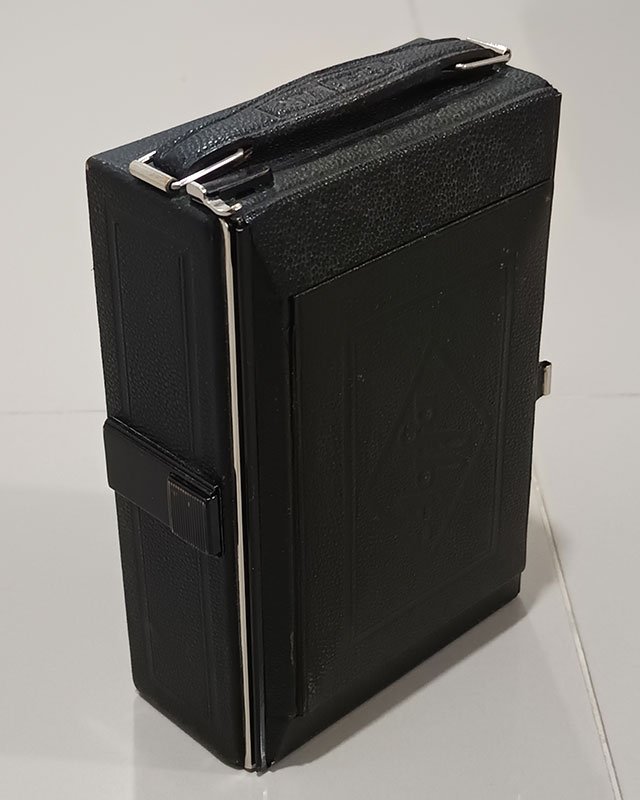
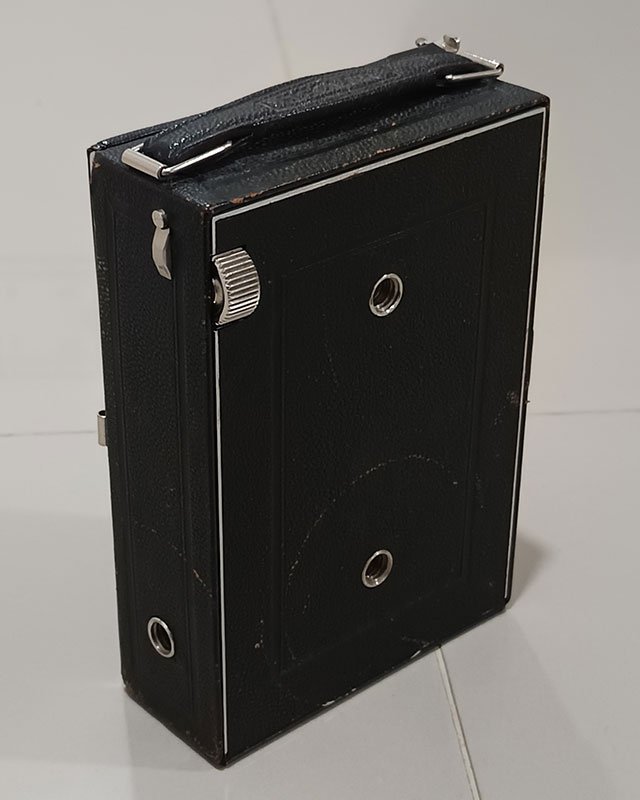
When folded, the Isolar 408 is roughly the size of a thick paperback book.
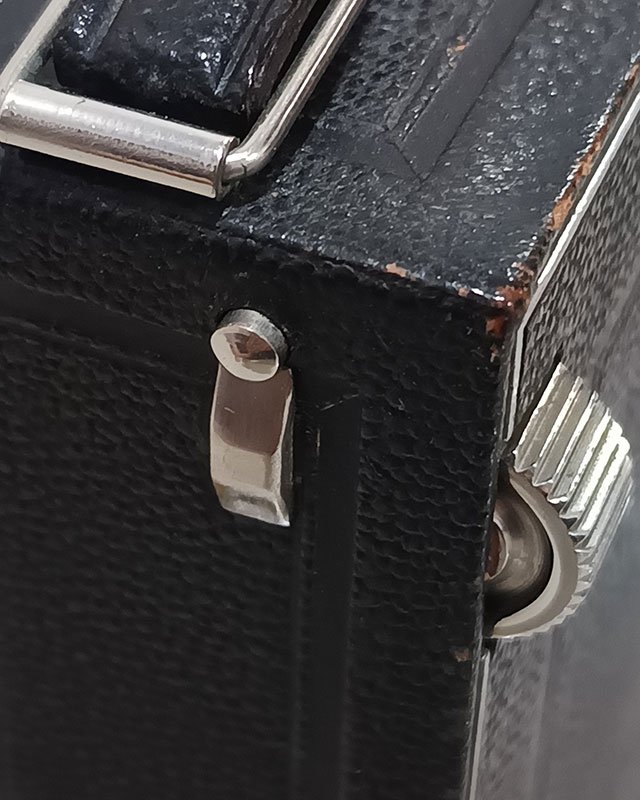
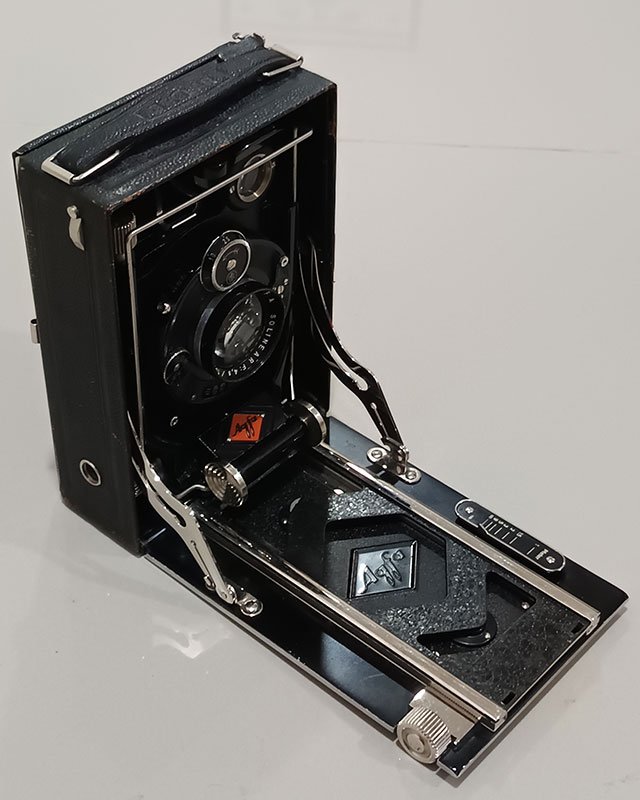
A small release button opens the front panel, which securely locks into a precise 90° angle supported by side struts.
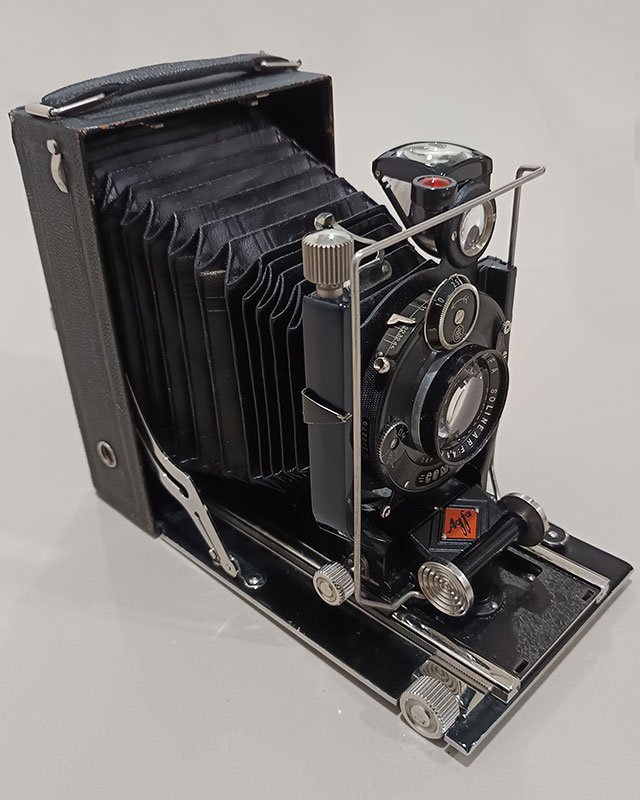
The leather bellows extend smoothly from the body.
2. Double Extension Bellows for Macro Photography
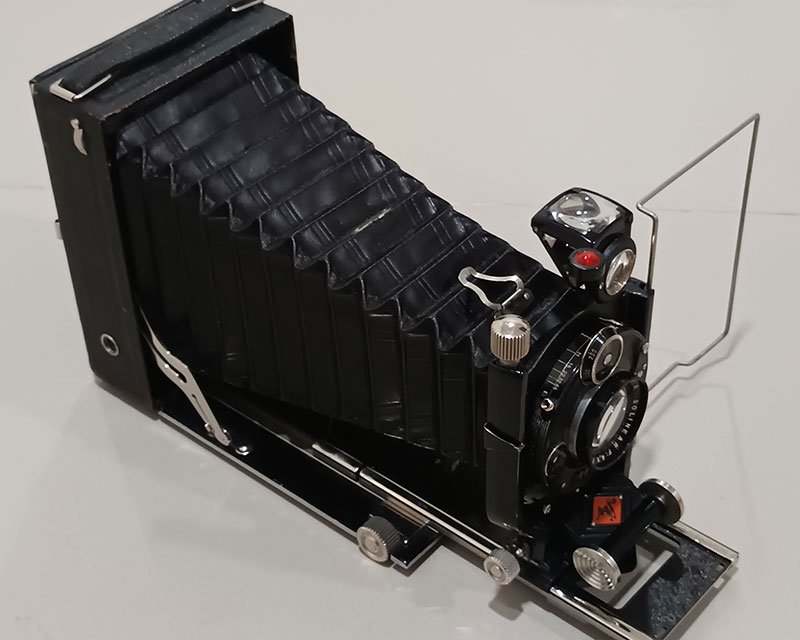
A key advantage for close-up (macro) or telephoto shooting is the "Double Extension" bed rail, which extends far beyond the standard focal distance. This allows the Isolar 408 to focus sharply on close-up objects down to 26 cm, capturing 1:1 life-size subjects on the film plane. Furthermore, the camera body is designed primarily for vertical orientation so that the longer side folds down, making bellows extension much easier than in a horizontal layout.
3. Triple Viewfinder System
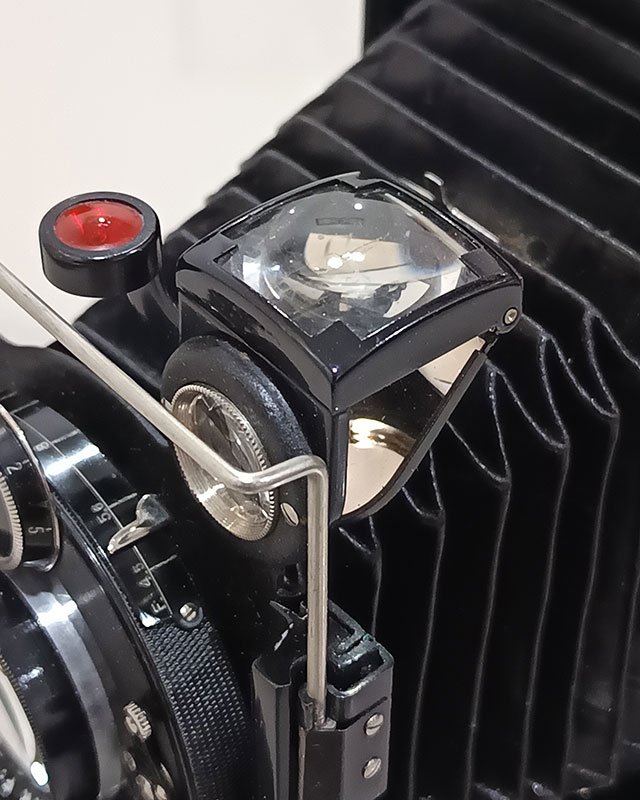
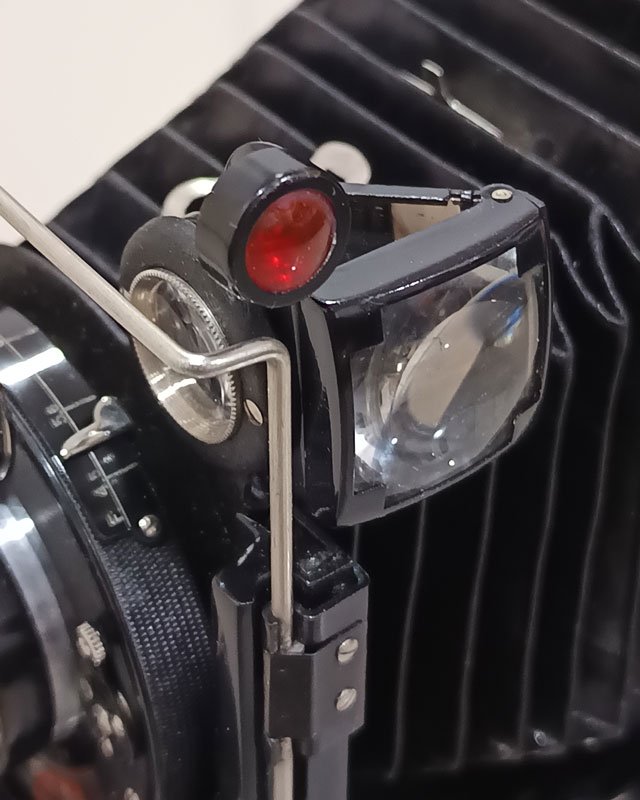
-
Brilliant Finder: Swiveling waist-level finder suitable for handheld shooting in both portrait and landscape orientation.
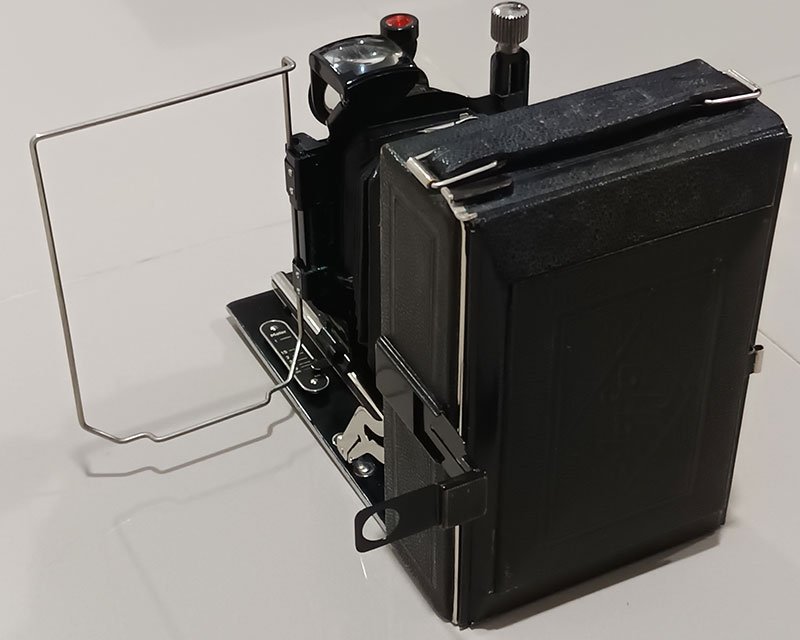
-
Wire Frame Finder: Frame sports finder for tracking fast-moving action.
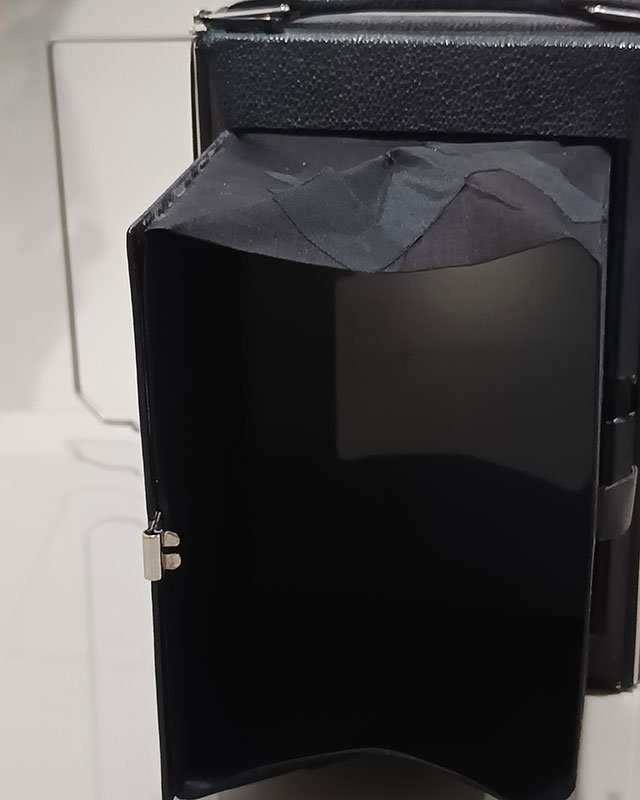
-
Ground Glass Screen: Rear ground glass panel providing the most precise framing and focus when mounted on a tripod (the image appears reversed and upside-down).
4. Camera Movements (Lens Board Adjustments)
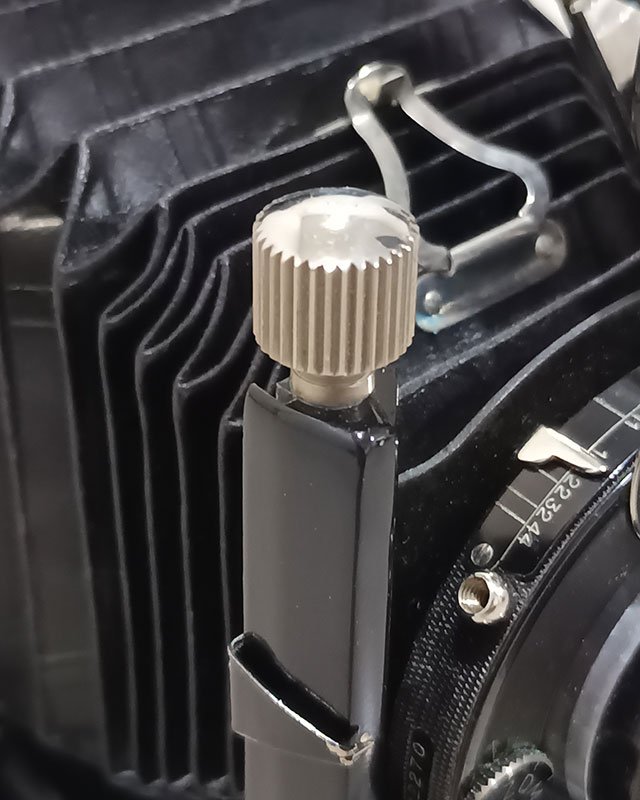
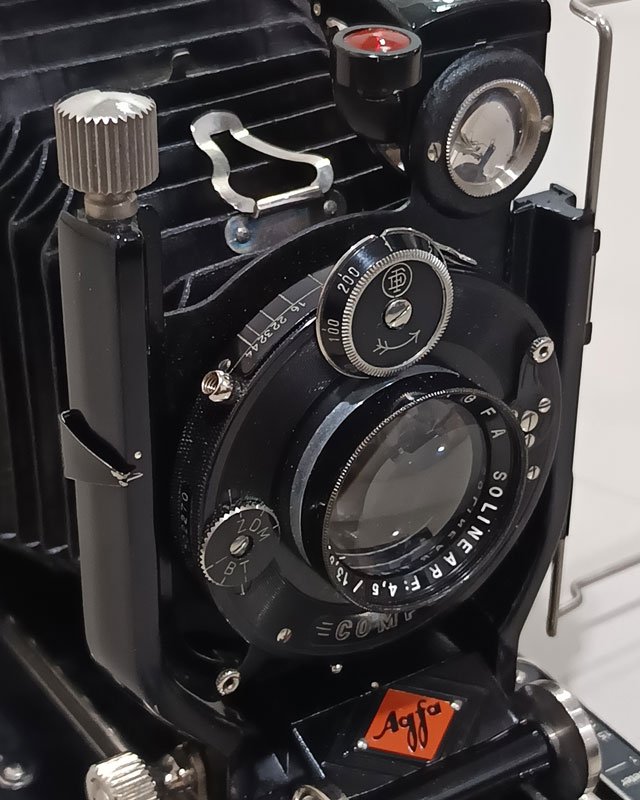
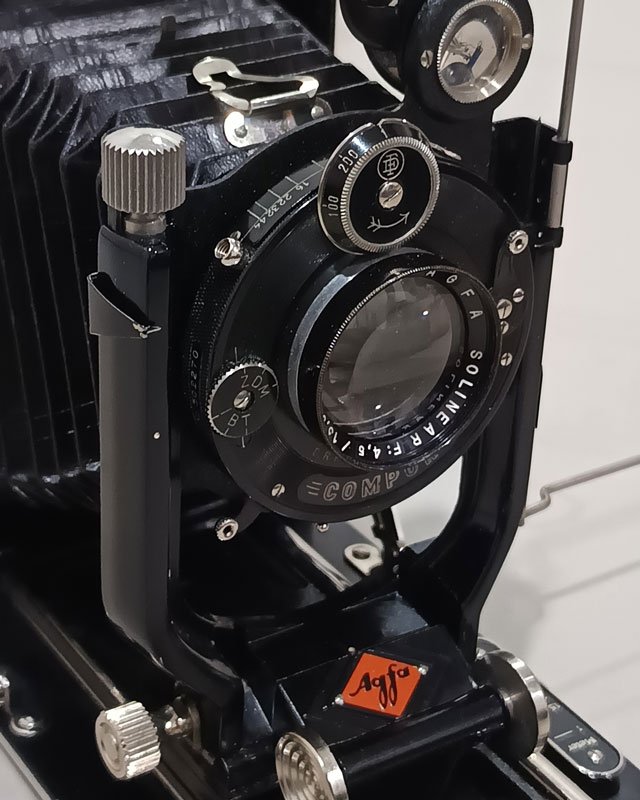
The front lens board offers micrometer screw controls for Rise/Fall (vertical shift) and Cross (horizontal shift).
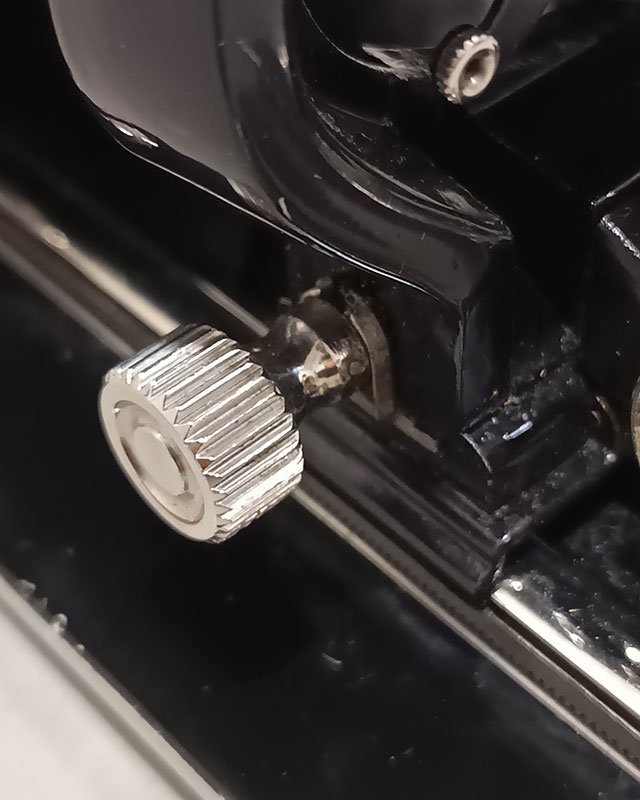
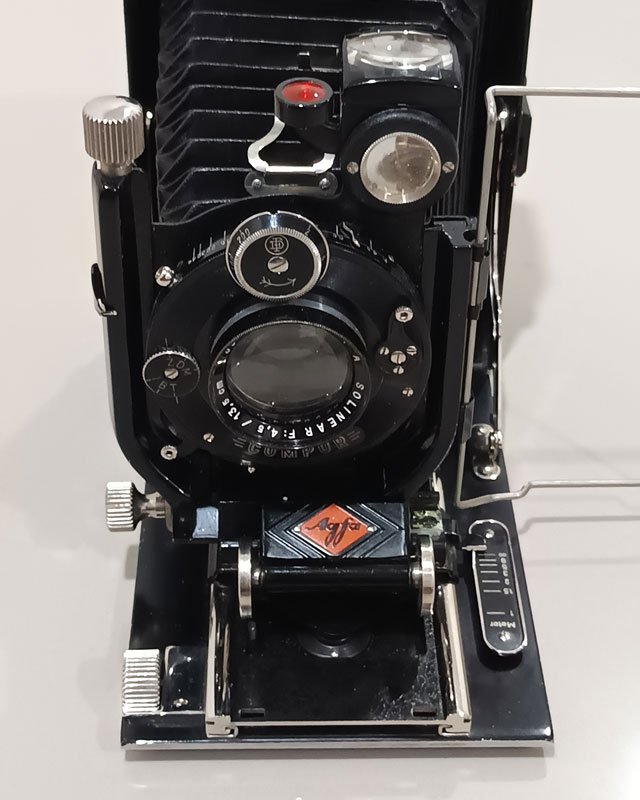
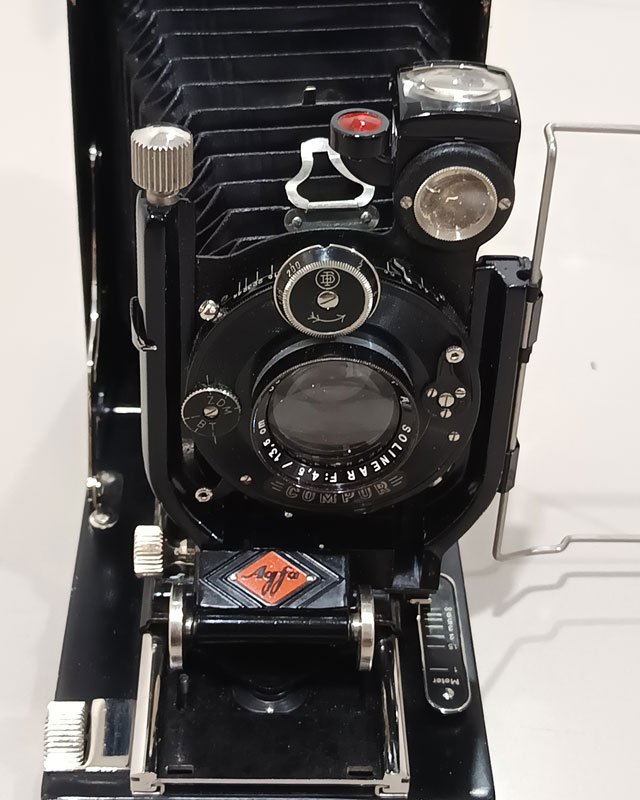
This allows photographers to adjust perspective lines and eliminate architectural keystoning smoothly.
Brand History: Agfa Isolar
The Isolar camera series originated from the Rietzschel Condor Luxus model. In 1926, Agfa (a German chemical conglomerate specializing in photographic films) acquired the camera manufacturing facility of Rietzschel in Munich as part of a major merger under IG Farben (alongside Bayer).
Thereafter, the camera division operated under the Agfa brand name and refined this line of cameras, producing them between 1928 and 1930. The Isolar 408 represented the premium, high-end offering in their lineup at the time.
Agfa Isolar (Jsolar) 408 S – Reviving a Classic German Folding Camera for 4x5 Large Format Beauty
Discover a passion for classic cameras paired with modern DIY ingenuity! The Agfa Isolar 408 S, a vintage folding plate camera from Germany, has been brought back to life with a custom-designed 3D-printed film back adapter. This modification transforms the original glass-plate camera into a fully functional Large Format setup capable of taking 4x5 Sheet Film Holders.
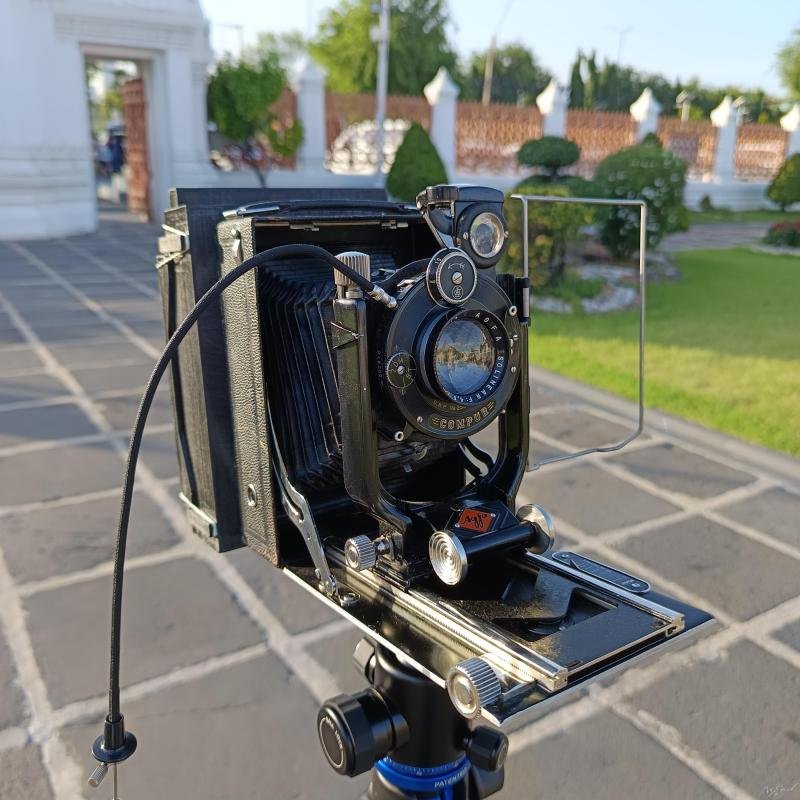
Technical Specifications
-
Camera Body: Agfa Isolar (Jsolar) 408 S
-
Lens: AGFA SOLINEAR f/4.5 13.5 cm (135mm)
-
Shutter: COMPUR
-
Custom Modification: 3D Printed 4x5 Sheet Film Back (designed to hold standard 4x5 film holders at the back)
-
Viewfinder: Pull-out wire frame finder and waist-level finder
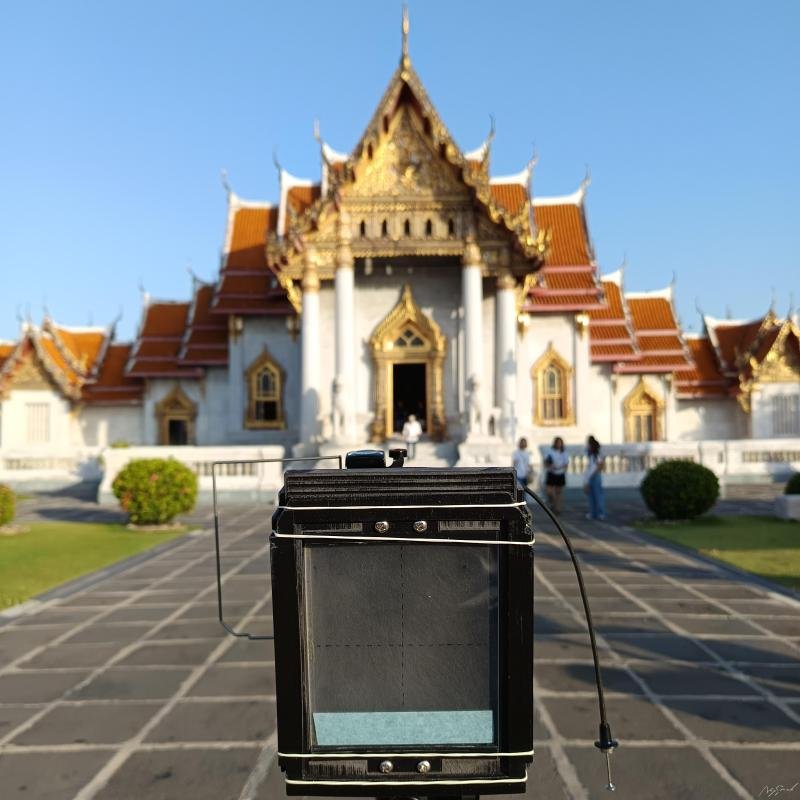
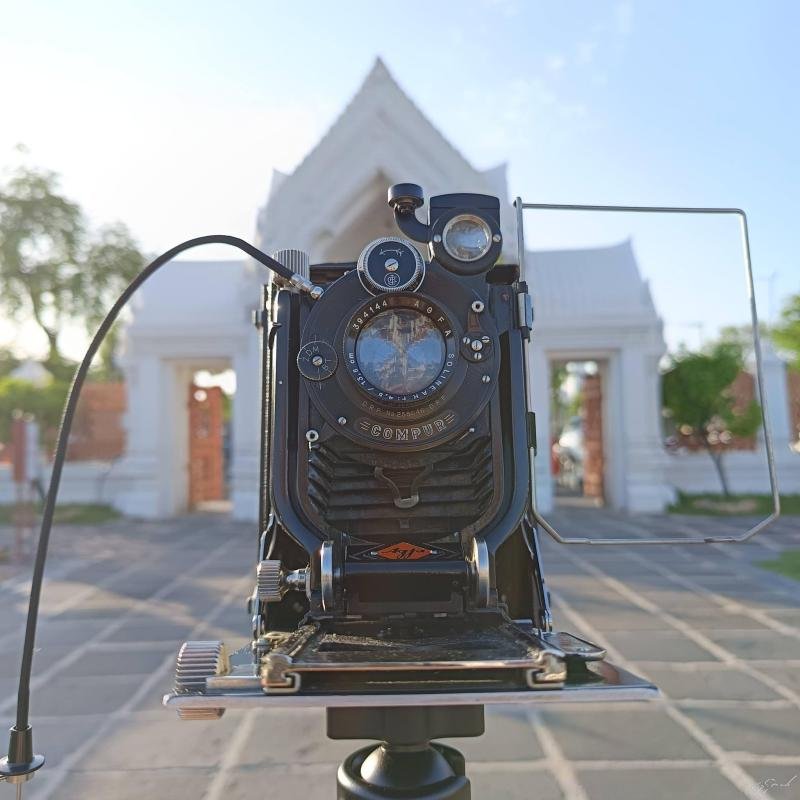
Shooting & Developing Process
Capturing images with this modified Large Format camera requires precision and a deep understanding of analog processes.
Shooting Setup
-
Location: The Marble Temple (Wat Benchamabophit Dusitwanaram)
-
Film: Ilford Delta 100 Professional (4x5 inches)
-
Aperture: f/22 (for edge-to-edge sharpness and deep depth of field)
-
Shutter Speed: 1/25 sec
Film Developing Recipe
-
Developer: 510 Pyro
-
Dilution: 2 : 500
-
Temperature: 20°C
-
Developing Time: 35 minutes (Semi-stand development)
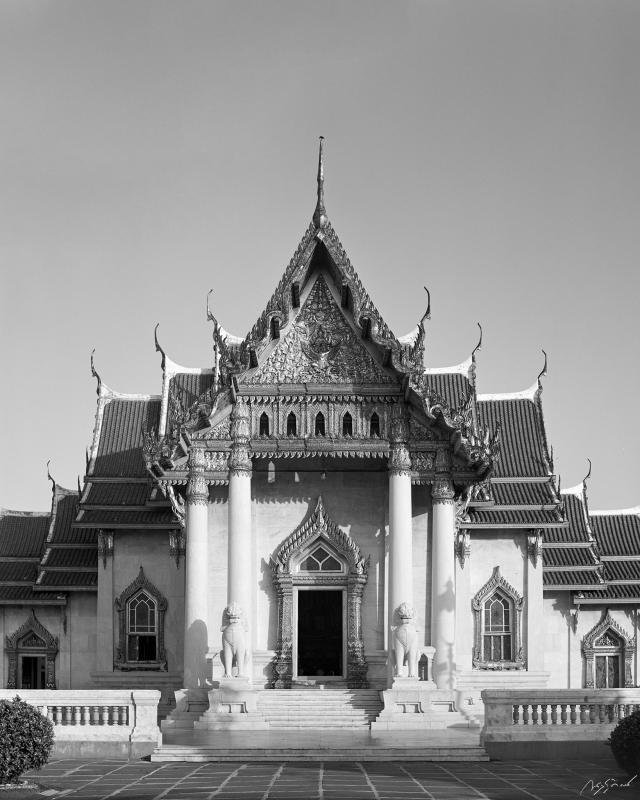
Image Analysis
This black-and-white photograph of the main ordination hall at Wat Benchamabophit showcases the impressive performance of the Agfa Solinear 13.5cm lens:
-
High Sharpness & Architectural Detail: Stopping down to f/22 yields exceptional sharpness, capturing fine details from the intricate roof pediment and gables to the marble pillars and stone floor tiles.
-
Smooth Tonal Range: The combination of Ilford Delta 100 and 510 Pyro developer produces a beautifully smooth grayscale gradient. Highlights under direct sunlight are well-controlled without being blown out, while shadow details beneath the roofline remain clean and rich.
-
Symmetry & Precise Film Plane: The centered composition highlights the symmetry of the temple, proving that the custom 3D-printed film back maintains a perfectly flat and aligned film plane with no focal distortion.
"When 1930s mechanical engineering meets modern 3D printing technology, this Agfa Isolar becomes more than just a display piece—it is a powerful tool for creating fine art Large Format photography."
Additional Information
Agfa Isolar (Plate Camera Version) Model No. 208
Standard large plate size 9x12 cm. Manufactured between 1928 and 1930 in Germany.
The Isolar series of plate cameras is considered a premium/high-end series, positioned higher than the Standard series.
Specifications & Details:
Flagship Lens: This camera uses an Agfa Solinear f/4.5 lens with a focal length of 13.5 cm (135mm). At that time, Solinear was Agfa's top-of-the-line lens (superior to typical anastigmatized mats). It features a 4-piece design, allowing for excellent correction of distortion. It provides high sharpness and incredibly smooth separation of the image from the background.
Compur Shutter System:
The lens is mounted on Germany's renowned Compur mechanical shutter system, offering high shutter speed accuracy and greater durability than conventional shutter systems.
Double Extension Bellows System:
The bellows can be extended to twice its original length (Double Extension) via a dual metal rail system, allowing the camera to be moved closer to subjects for macro/close-up shots, or to switch to lenses with higher focal lengths—a function typically found only in professional-grade cameras.

Comments powered by CComment