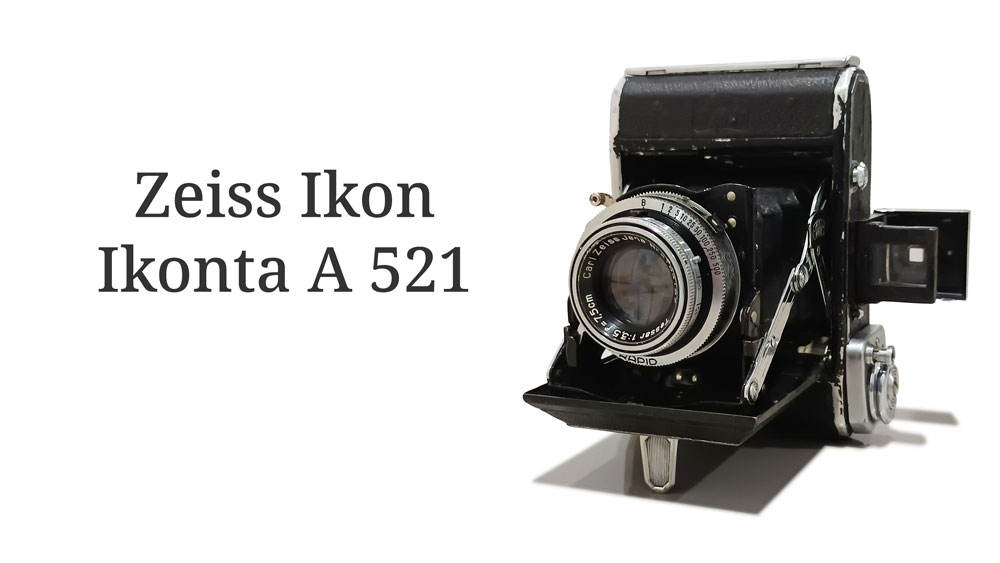
Zeiss Ikon Ikonta A 521 (6x4.5)
The Zeiss Ikon Ikonta A 521 is a compact folding camera manufactured by Zeiss Ikon in Germany. Renowned for its classic design, precise mechanics, and high-quality optics, it is an ideal piece for enthusiasts who appreciate the timeless charm of analogue film photography.
Technical Specifications
-
Model Name: Zeiss Ikon Ikonta 521 (Ikonta A)
-
Image Format: 4.5x6 cm. (16 exposures per 120 roll)
-
Film Type: 120 Medium Format Film (also labeled as B2 / 6x9 cm. on vintage film backing paper)
-
Lens: Carl Zeiss Jena Tessar 1:3.5 7.5 cm. (Serial No. 2184157)
-
Shutter: Compur-Rapid
-
Shutter Speeds: B, 1, 1/2, 1/5, 1/10, 1/25, 1/50, 1/100, 1/250, to 1/500 sec
-
Aperture Range: f/3.5 – f/22
-
Focusing System: Front-element focusing with meter scale (1.2 m. - infty)
-
Viewfinder: Folding Optical Finder mounted on the side of the body
Key Features & Highlights
-
Double Exposure Prevention:
-
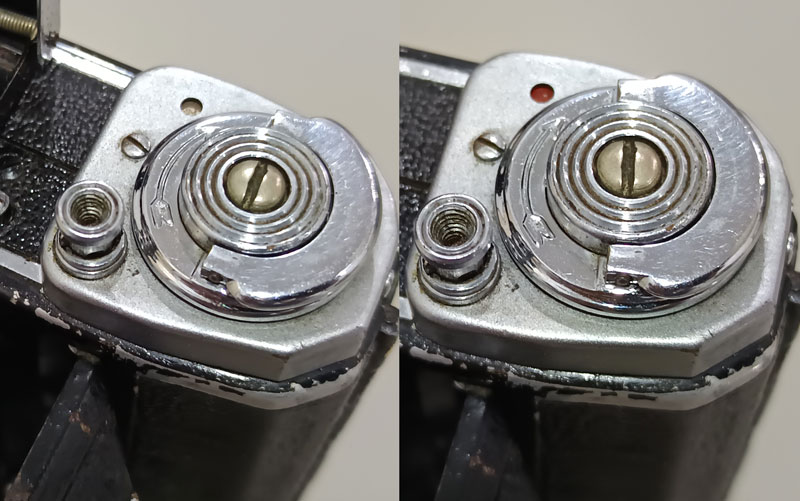
Features an integrated shutter interlocking mechanism. If the film has not been advanced, the shutter button on the camera body remains locked and displays a red dot indicator near the winding knob to signal whether it is ready to shoot or requires advancing.
-
-
Dual Red Window System:
-
The back door features two red windows. Since 120 film backing paper of that era only printed frame numbers for 6x9 cm. formats (numbers 1–8), capturing 4.5x6 cm. images required viewing the same number in the first window, then advancing it to the second window for the next shot—yielding a total of 16 frames per roll.
-
-
The Legendary Tessar Lens:
-
The Carl Zeiss Tessar f/3.5 7.5 cm. lens, famously nicknamed the "Eagle Eye," delivers exceptional sharpness, beautiful skin tones, and rich contrast.
-
-
Compur-Rapid Shutter:
-
A reliable mechanical leaf shutter offering precise exposures up to a fast 1/500 sec, complete with a built-in self-timer lever.
-
-
Concealed Back Latch:
-
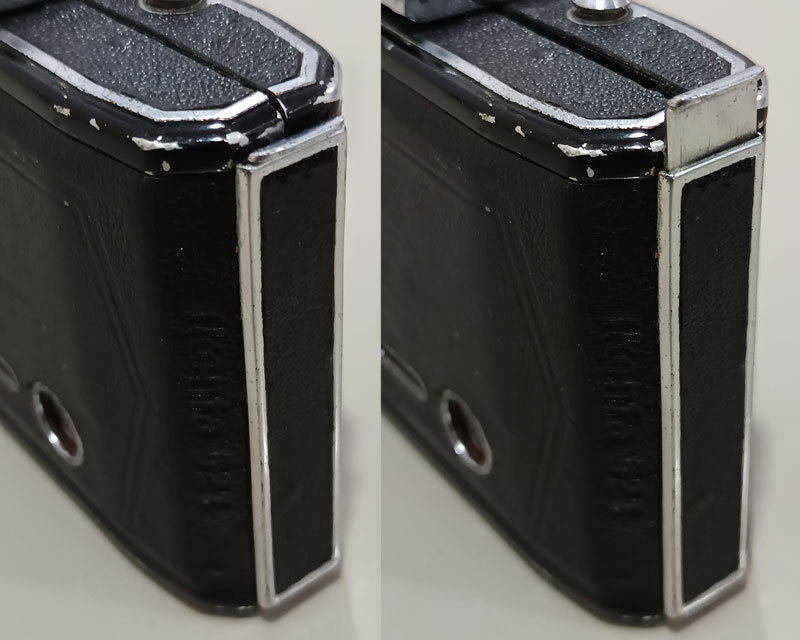
Includes a seamless back release mechanism hidden beneath the chrome trim, offering a clean aesthetic while preventing accidental opening.
-

When I bought this camera, I didn't know any details or history, but I liked its shape and appearance and wanted a medium format camera 4.5 x 6 cm, to try taking pictures with. I saw that it could be folded up, small and compact, and it looked convenient to carry around. It used 120 roll film, which is commonly sold, including black and white film, color film, and slide film. One roll can take 16 pictures, which is fun. It got bigger film than a 35 mm camera. The camera I got was not expensive, and it came with a leather case and a yellow filter, but it was in a worn condition according to its age. ...
Production History of Zeiss Ikon Ikonta A (521)
1. The Origins of the Ikonta Series & The Merger (1926)
In 1926, Zeiss Ikon was formed through the merger of four major German camera manufacturers: ICA, Contessa-Nettel, Ernemann, and Goerz, heavily backed by the optical giant Carl Zeiss.
In 1929, Zeiss Ikon introduced the "Ikonta" line of folding cameras. Designed to offer portability and ease of use without compromising on optical excellence, the Ikonta series became one of the company's most successful and longest-running product lines.
2. Format Designations (A, B, C)
Zeiss Ikon used letter suffixes after the Ikonta name to indicate the frame format recorded on 120 film:
-
Ikonta A: 4.5 x 6 cm. format (Vertical/half-frame orientation, 16 exposures)
-
Ikonta B: 6 x 6 cm. format (Square orientation, 12 exposures)
-
Ikonta C: 6 x 9 cm. format (Horizontal rectangular orientation, 8 exposures)
3. Introduction of the Ikonta A Model 521 (1938)
The Ikonta A 521 was first introduced in 1938 as an upgraded successor to the earlier Ikonta 520.
Major Upgrades in the 521 Model:
-
Double Exposure Prevention: Designed with an internal interlocking link between the film transport mechanism and the body shutter release. If the film is not advanced to the next frame, the shutter release remains locked.
-
Body-Mounted Shutter Release: Relocated the shutter release button to the left top plate of the camera body rather than requiring the user to trip the shutter lever directly on the lens barrel, significantly reducing camera shake.
-
Folding Optical Finder: Equipped with a metal frame optical viewfinder that folds flat against the body when not in use.
4. World War II Era and Post-War Production (1939 – 1950s)
-
During WWII (1939–1945):
Production at Zeiss Ikon factories in Dresden shifted primarily toward military equipment. However, civilian cameras fitted with pre-war Carl Zeiss Jena lenses (such as the Tessar 7.5cm f/3.5 with serial numbers starting in the 2xx–3xx range, as seen on this model) were produced between 1938 and 1940.
-
Post-War Split:
Following the war, the division of Germany led to the split of Zeiss Ikon into two entities:
-
Zeiss Ikon Stuttgart (West Germany)
-
VEB Zeiss Ikon Dresden (East Germany)
-
The Ikonta 521 model resumed production in West Germany through the early 1950s before eventually evolving into the Ikonta 521/16 (featuring anti-reflective T-coated lenses) and later giving way to the Nettar and Mess-Ikonta series.
Timeline Summary of Ikonta A (521)
-
1929: Zeiss Ikon launches the Ikonta line.
-
1938: Introduction of the Ikonta A 521, featuring double exposure prevention and a top-plate shutter button.
-
1938–1945: Early wartime production in Germany featuring Carl Zeiss Jena optics and Compur/Compur-Rapid shutters.
-
1948–1953: Post-war production resumes with minor design updates and coated optics.
-
Mid-1950s: Production concludes as consumer preference shifts toward 35mm (135) formats and rangefinder cameras.
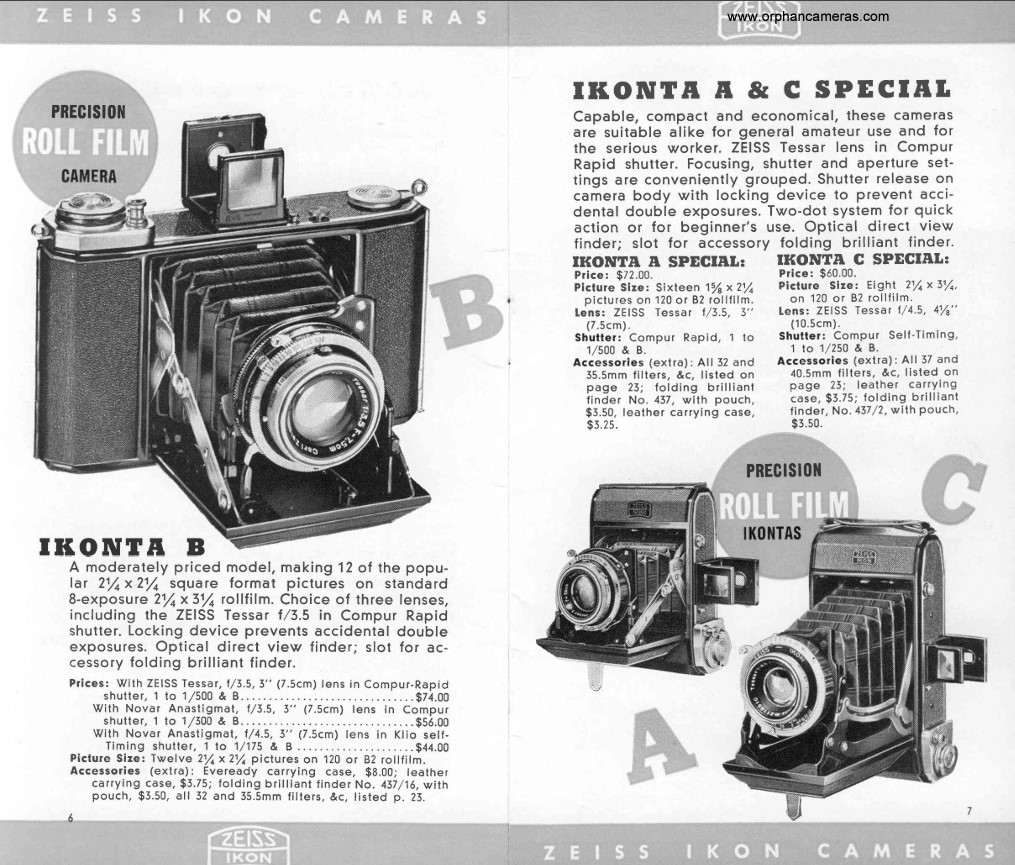 Zeiss Ikon Ikonta A 521 Brochure
Try searching for details of this camera, found a brochure that shows details of this IKONTA camera model, produced in 3 sizes, all using 120 or B2 film rolls with a width of 6 cm., length according to the size of the camera, according to the model produced. Looking at the details, IKONTA A (which is this one) is the smallest, can take pictures size 1 5/8 x 2 1/4 inches, comes with Zeiss Tessar lens f/3.5 7.5cm., Compur Rapid shutter, shutter speed 1 - 1/500 seconds, and B (Blub) mode. The selling price was $72.00 in 1938, equivalent to about $1,611.90 today (2024), which is about 55,500.00 baht.
The production line of this camera model was between 1938 - 1954. It is a Medium Format camera using 120 roll film that is still in use and available to buy today. The camera has a registration number (Serial No.) G31531. I tried checking the details at Zeiss Ikon serial numbers and found that this is a camera from the first year of production of this camera model, which is 1938, before World War II (Prewar).
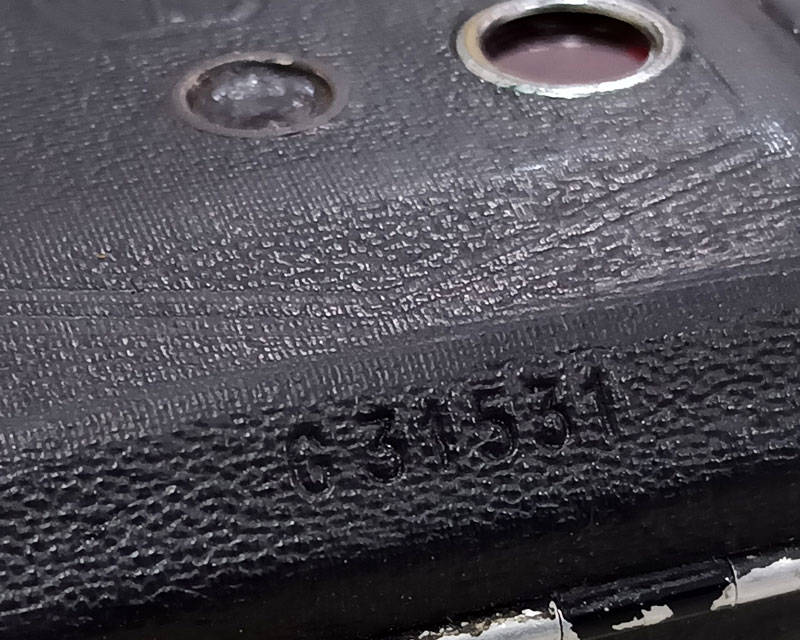 Zeiss Ikon Ikonta A 521 Body Serial No. G31531
Carl Zeiss Jena Tessar 3.5 f=7.5cm lens, registration number No.2184157, check at Carl Zeiss serial numbers, was also produced in 1937, before the war.
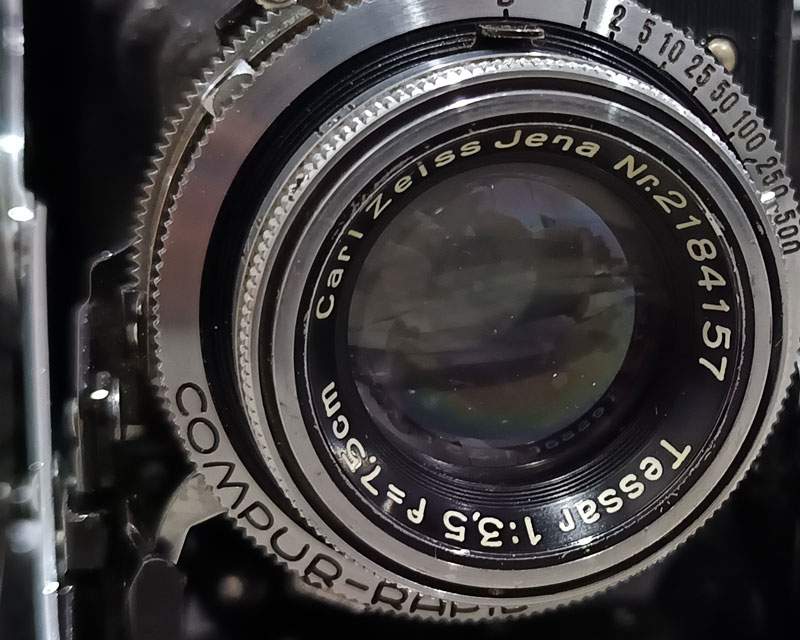 Zeiss Tessar f/3.5 7.5cm. Compur Rapid
Let's take a look at the camera details and usage.
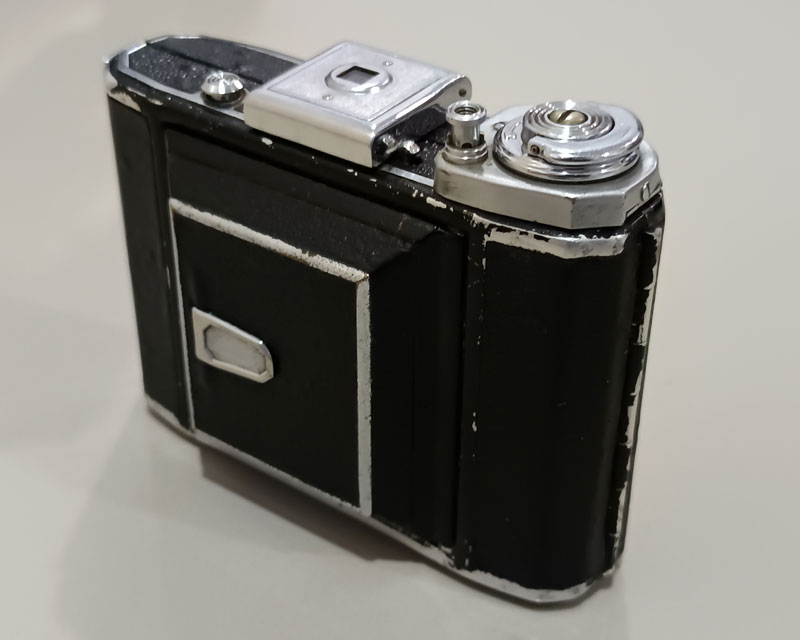
Zeiss Ikon Ikonta A 521 Front
The front of the camera, starting from the top, is a silver round button on the right of the camera. Press it to open the viewfinder and front lens panel. Next is the front and back viewfinders, folded together. The round button with a slightly higher stem is the shutter release button. If we hold the camera to take a picture, the shutter release button is on the left. The large round button has a folding ring, lift it up to rotate the film advance dial, inside the camera, the lens board has a silver metal plate that opens out into a tripod for setting the camera on a flat surface, such as a table, vertically.
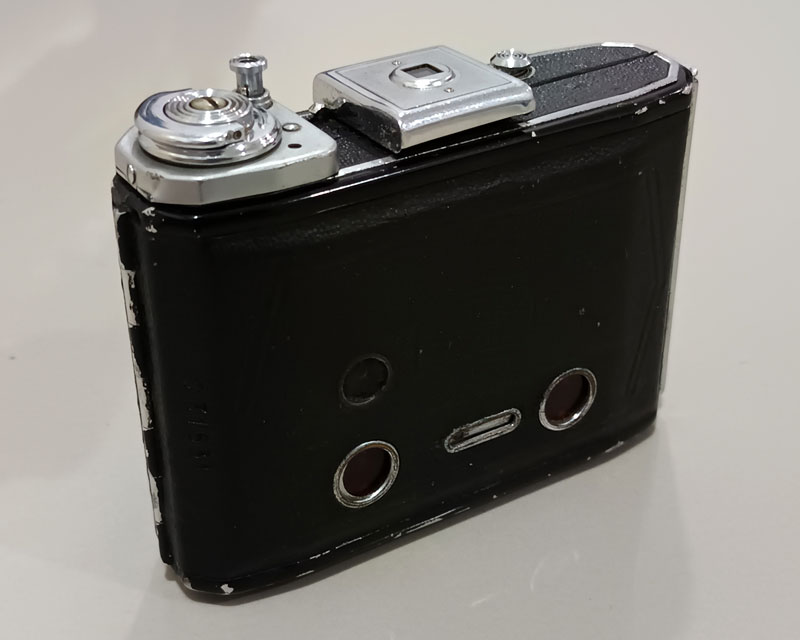
Zeiss Ikon Ikonta A 521 Back
On the back, there are 2 round holes with a sliding cover. Inside, there is clear red plastic for viewing the number of photos on the back of the film, this camera does not have a button for sliding the cover. It may have fallen off several times. When closing, you have to find a sharp object to poke into the hole and slide the cover to prevent light from entering. The hole on top that is normally closed, looking at other models, it does not have it. I guess it is a hole for viewing the number of photos for photos size 6x6 cm., it cannot be used with this camera, so it is closed and not used.
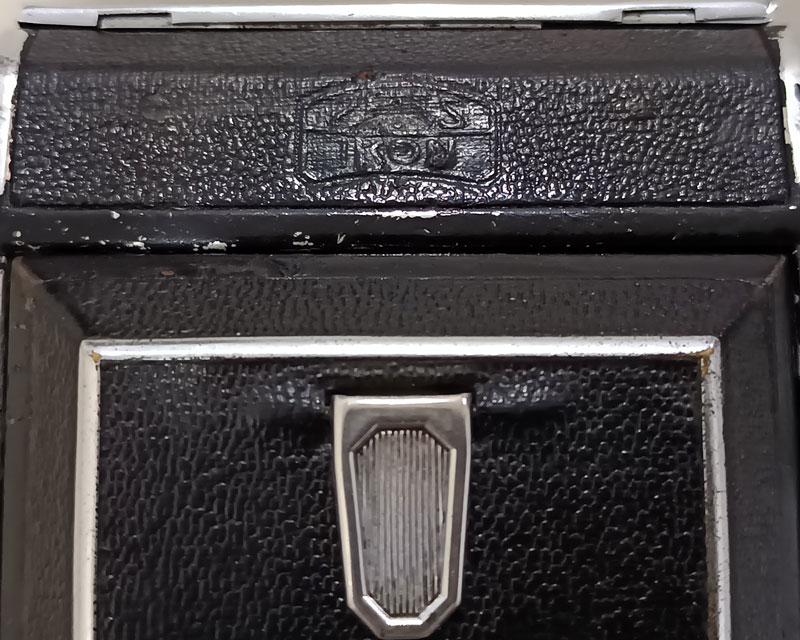
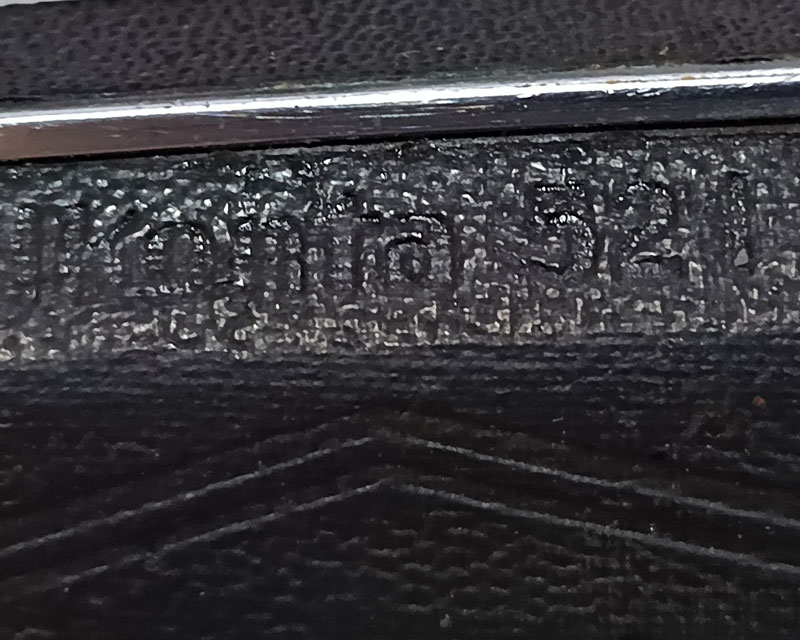
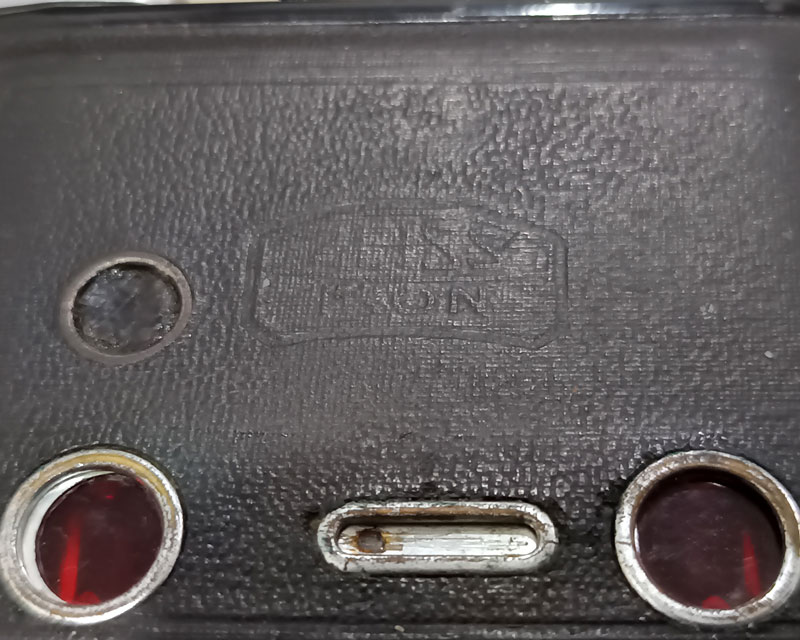
The leather stamp on the body of this camera, on the front, there is a small Zeiss Ikon logo.
On the back, the model name of the Ikonta 521 camera has a Zeiss Ikon logo in the middle. On the other side is the Series Number.
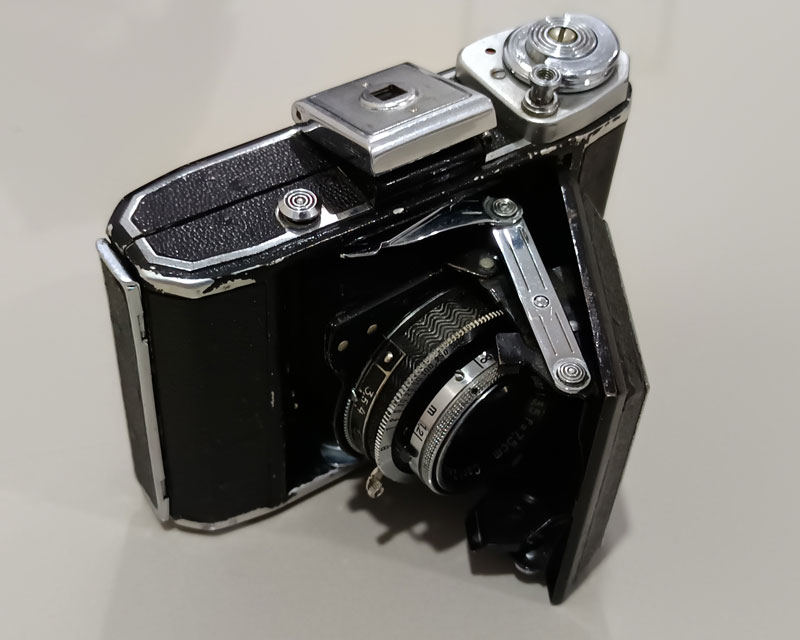
Zeiss Ikon Ikonta A 521 Open
Activation: Press the silver round button on the right side of the camera to open the top viewfinder and front lens board.
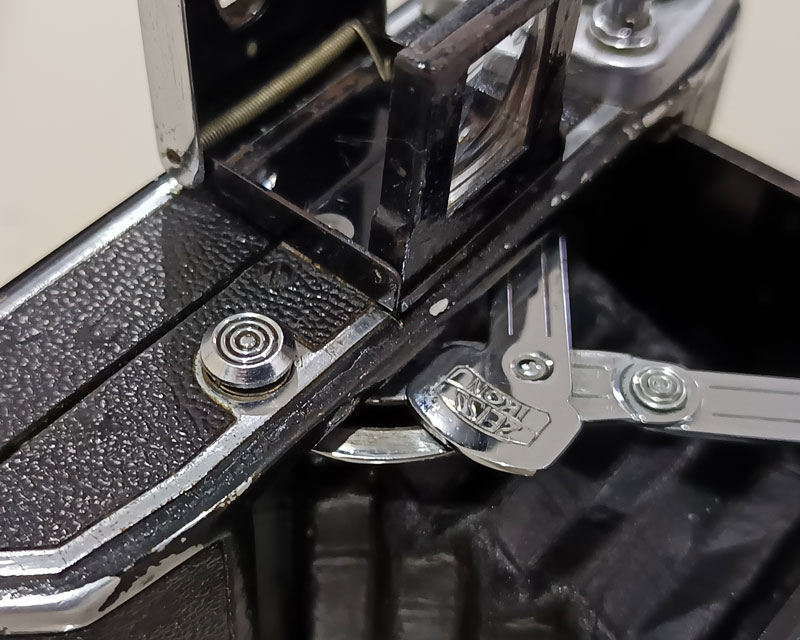
ช่องมองภาพด้านบน หน้าหลัง ตั้งฉาก และเมื่อกางเลนส์จนสุด จะเห็นโลโก้ Zeiss Ikon
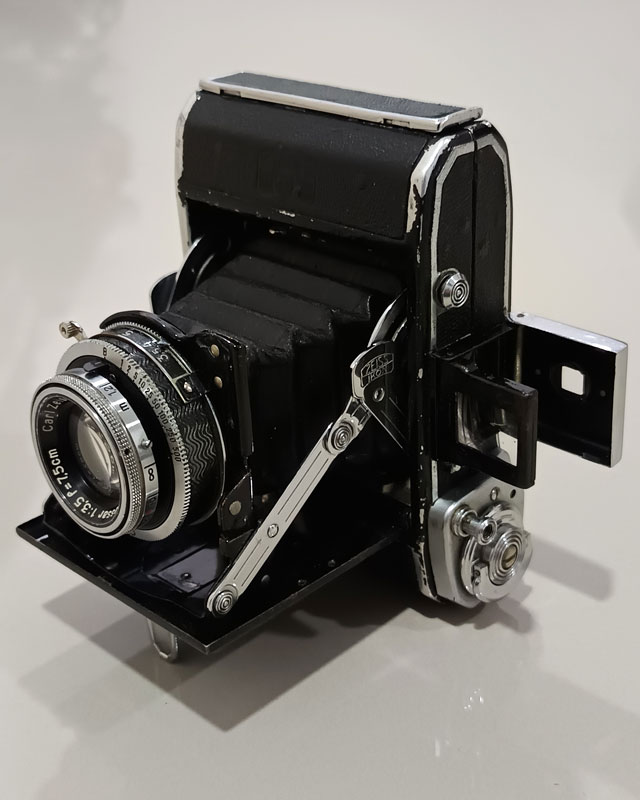
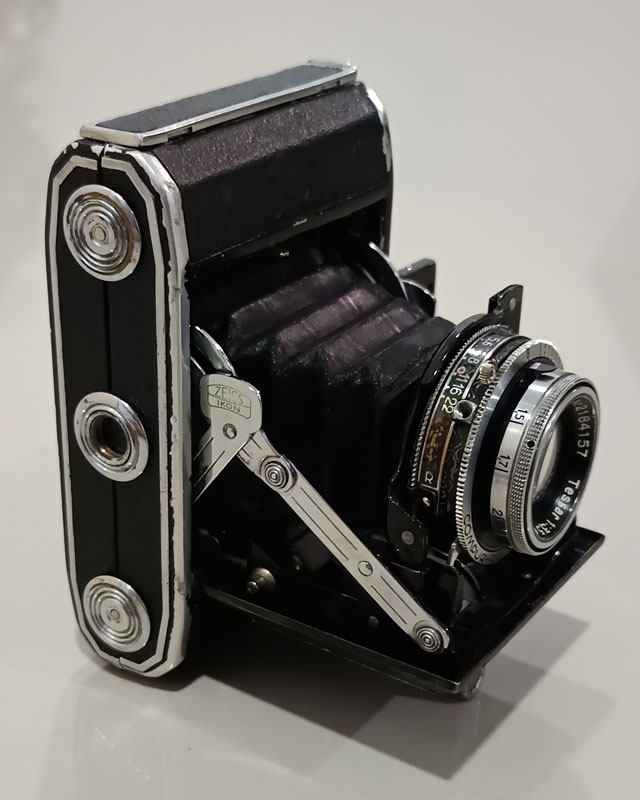
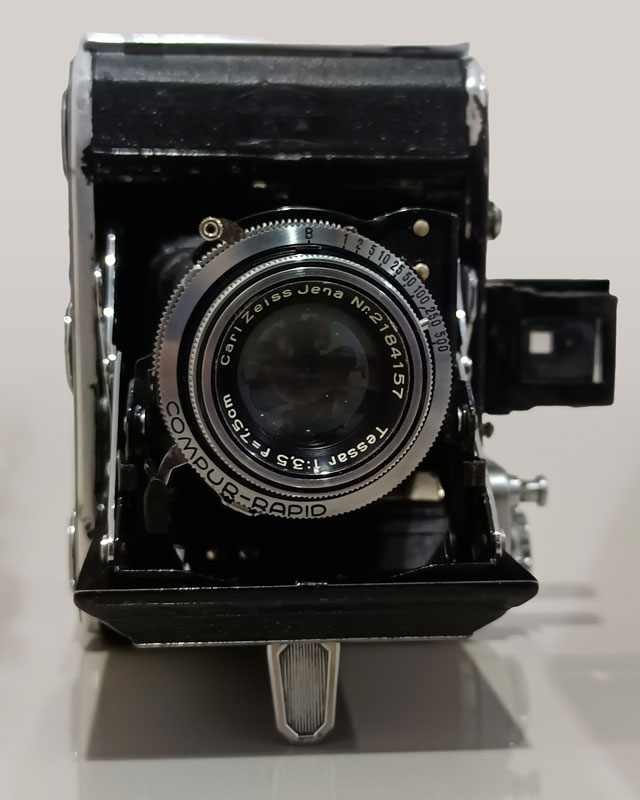
Camera setup images, left, right and front of the camera
When the lens and viewfinder are unfolded, open the front tripod under the lens cover, and it can be set on a table or flat surface. On the right side of the camera, there are upper and lower round plates for holding the film roll spool and holes for the tripod plate. This camera has a 3/8-inch screw hole. If you want to use it with the current tripod plate, you need to find a converter to 1/4 inch.
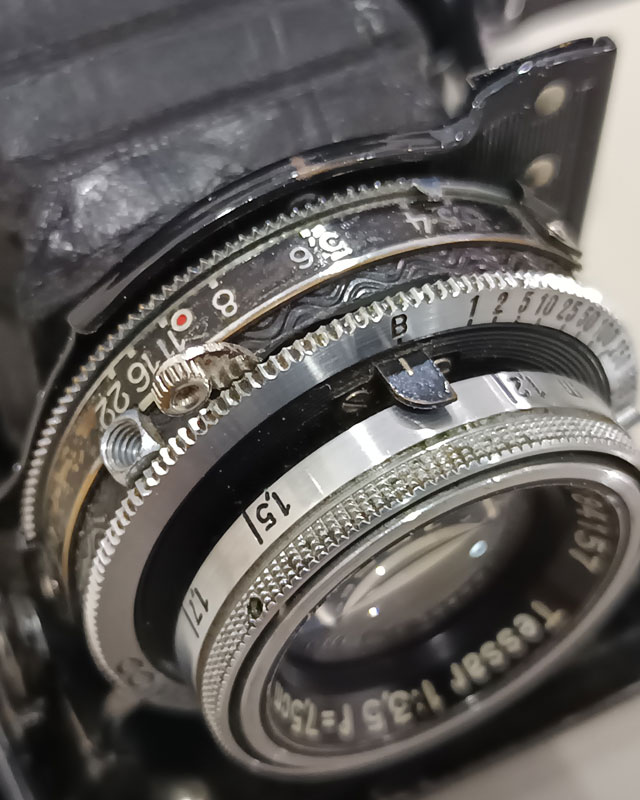
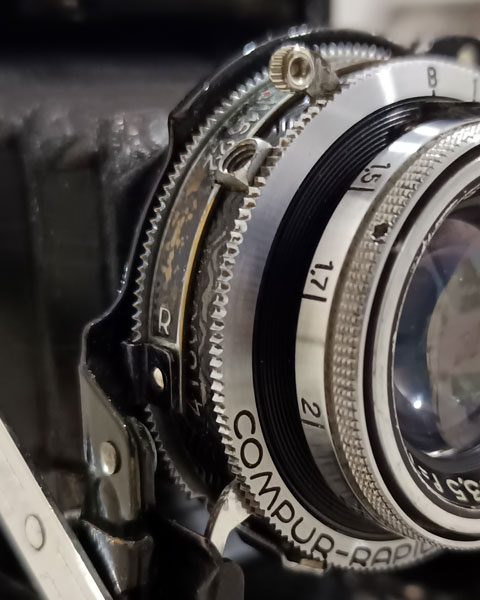
Lens set details
Lens and Usage
On the top, there are aperture values f/3.5 - f/22. Turn the innermost dial to adjust the aperture value.
Shutter trigger. Push it to the left (when the lens is facing out) to raise the shutter trigger before pressing the shutter release button on top of the camera.
Threaded hole for inserting the shutter release cable.
Ring for adjusting the shutter speed value by turning the shutter value 1 - 500 (1/500 seconds) and the desired B to align with the white line on the black iron plate on top of the lens.
The outermost ring for adjusting the focus distance has values in meters from 1.2 meters to infinity.
On the bottom right of the lens is the shutter trigger that connects to the shutter button on the camera.
Zeiss Ikon Ikonta A 521 Double Exposure Prevention
On the top, near the film advance dial, there is a mechanism to prevent repeated shooting. There is a small hole to indicate the film advance. When a picture is taken, it will be displayed in white. The shutter button is locked and cannot be pressed to take a picture. The film advance dial must be rotated to the next picture. The small circle will be displayed in red, indicating that it is ready to take another picture and the shutter button can be pressed.
Zeiss Ikon Ikonta A 521 Open Back Cover
The rear film compartment is a cover with a lock. Open the cover by pulling the latch on the right side of the camera to release the rear cover.
Zeiss Ikon Ikonta A 521 Open Back Cover Open
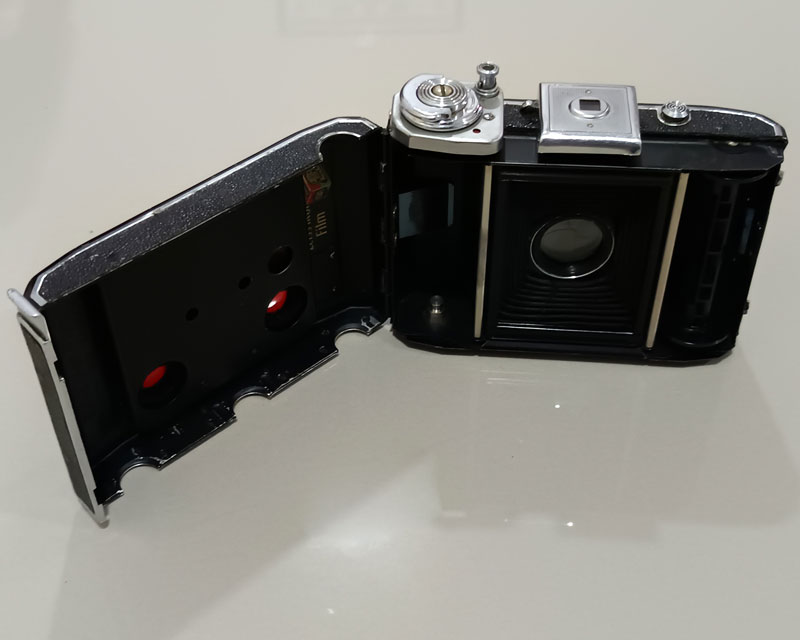
Once unlocked, open the back cover to reveal the film slots, with the left side for empty film spools and the right side for new rolls of film.
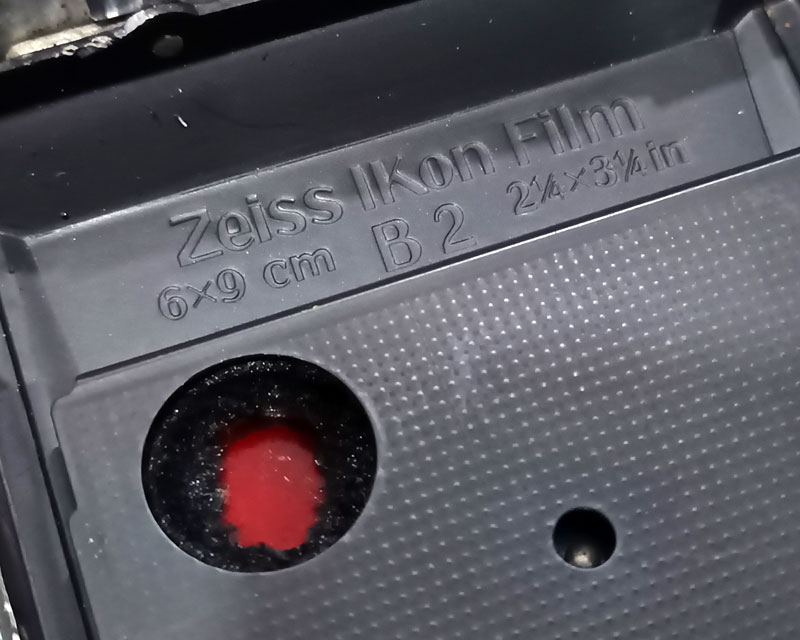
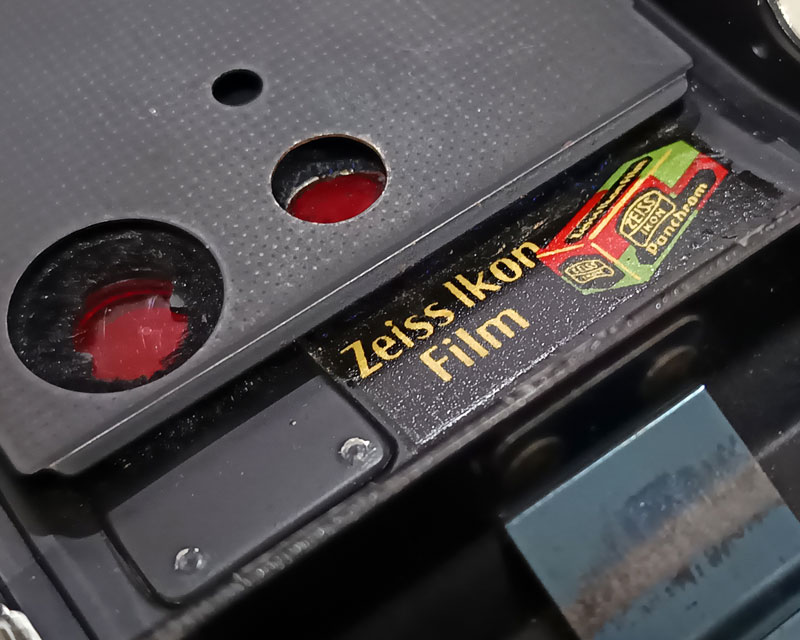
Inside the back cover, there are details of the film that will be used with this camera.
It seems that at that time, Zeiss Ikon produced its own film, so the film name was specified.
Normally, in that era, the camera manufacturers tried to get users to buy their own film to use as well, for various benefits, so they specified it like this.
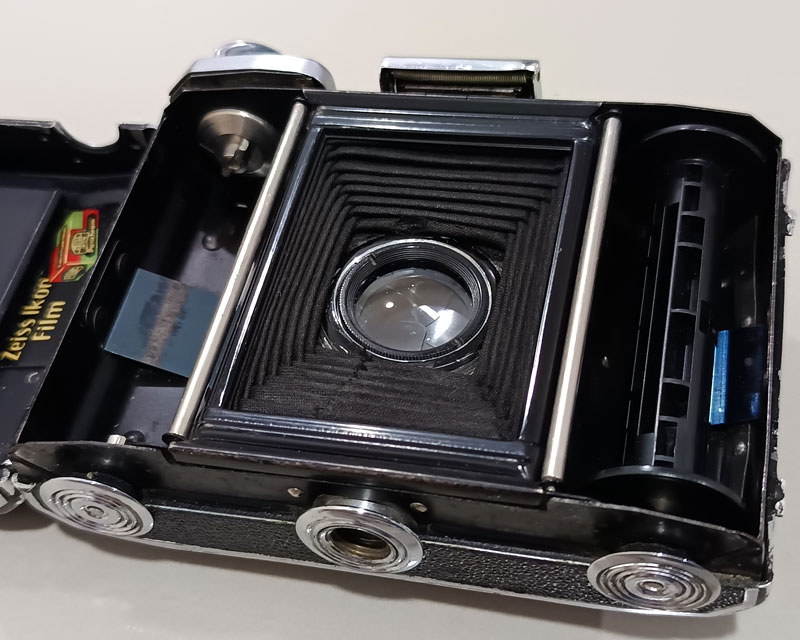
Insert the film core by prying open the round buttons on the bottom of each side. Then close the back cover and press the back cover lock button tightly. Then you are ready to take pictures.
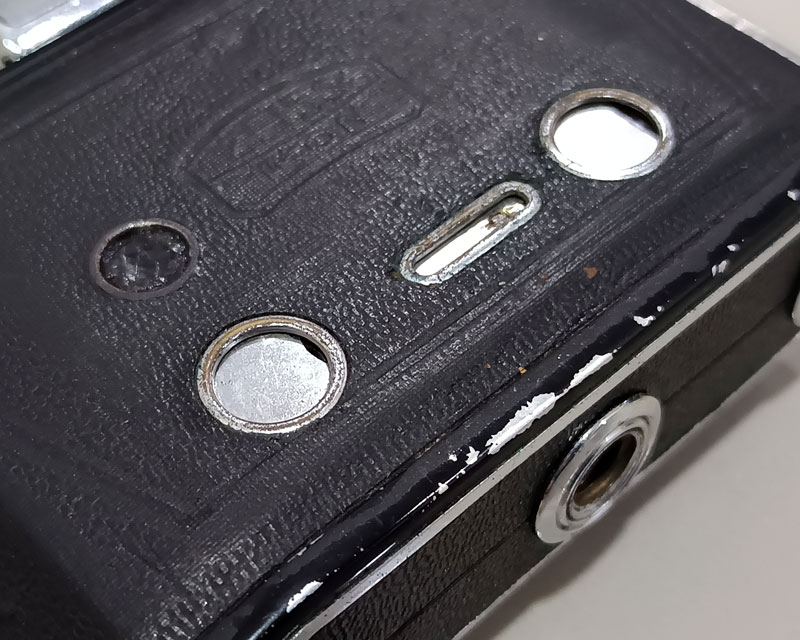
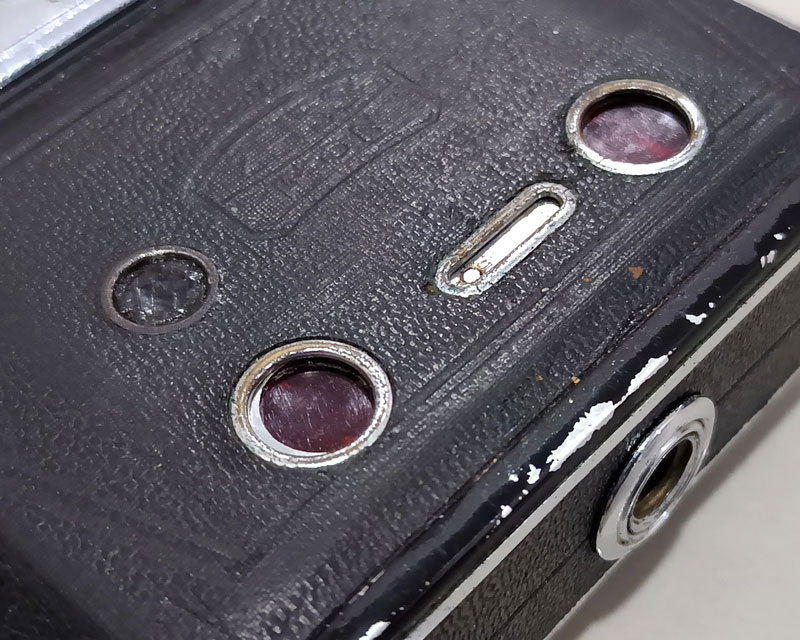
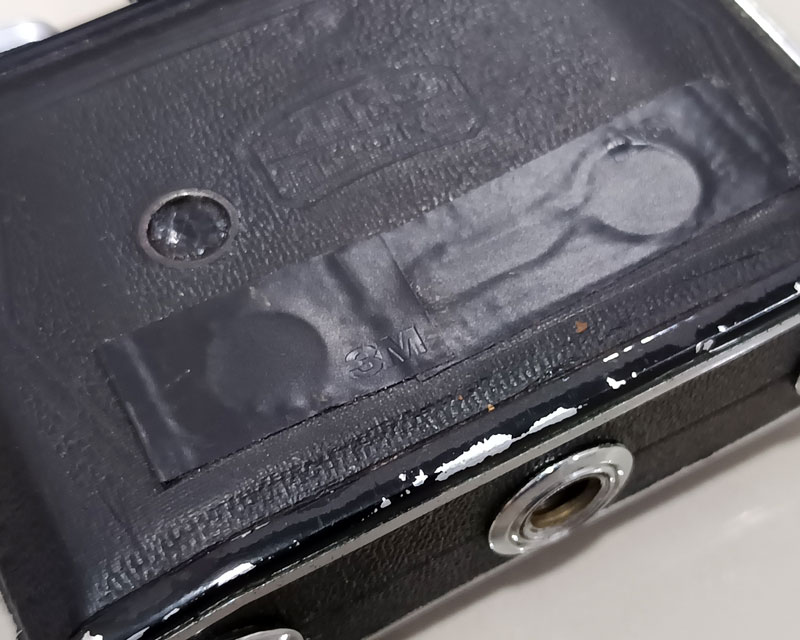
When closing the back cover, you must also cover the transparent red round cover. However, this camera is difficult to open and close because there is no slider for opening and closing the cover. So I left it open and covered it with black tape to block out light. I only opened it when I wanted to advance the film to see the numbers.
Example photos taken with this Zeiss Ikon Ikonta A 521
Aesthetics & Storytelling
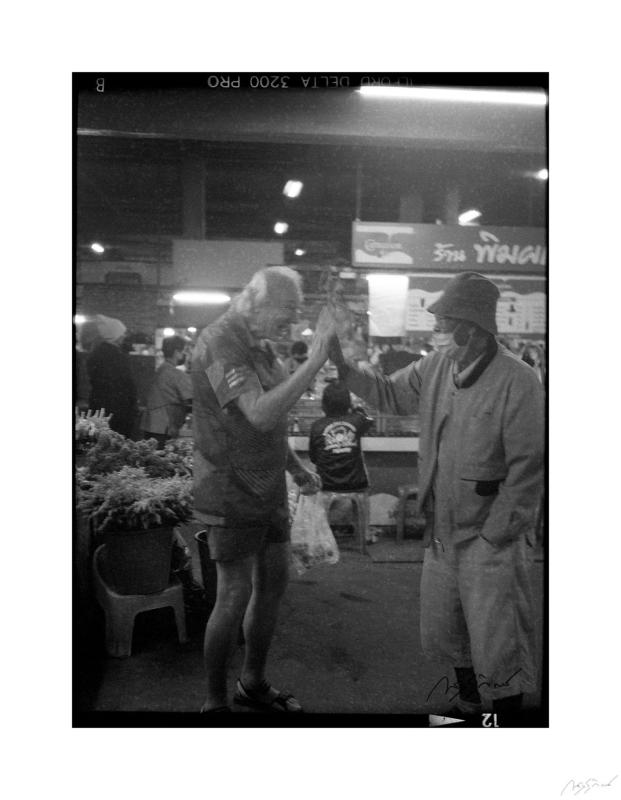 Zeiss Ikon Ikonta A 521 Sample 001
Sample Photo 001
-
Highlights: A compelling street photograph capturing a decisive moment—a high-five shared with warm expressions under hats and masks.
-
Composition: The subjects frame the scene symmetrically, drawing immediate focus to the interaction at the center.
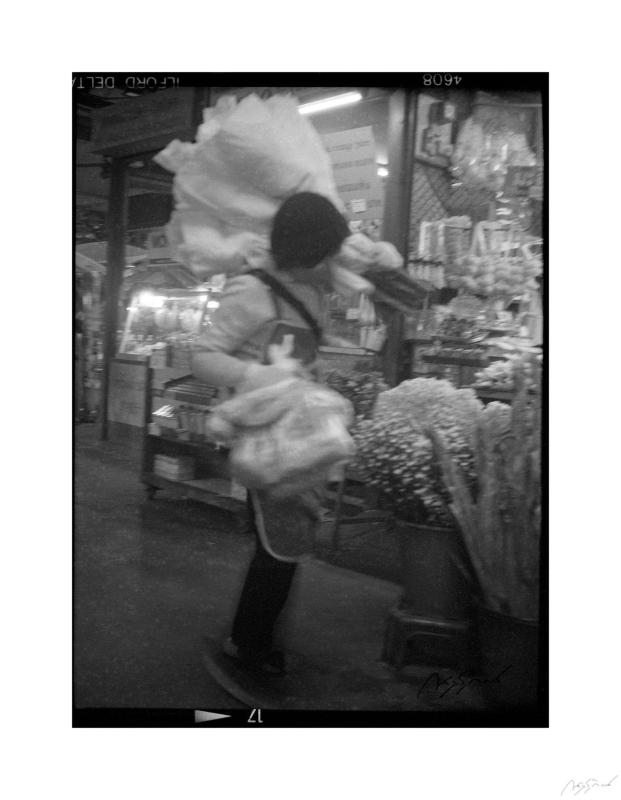
Sample Photo 002
-
Highlights: The motion blur on the walking vendor contrasted against the static background conveys movement and energy, effectively illustrating daily market life.
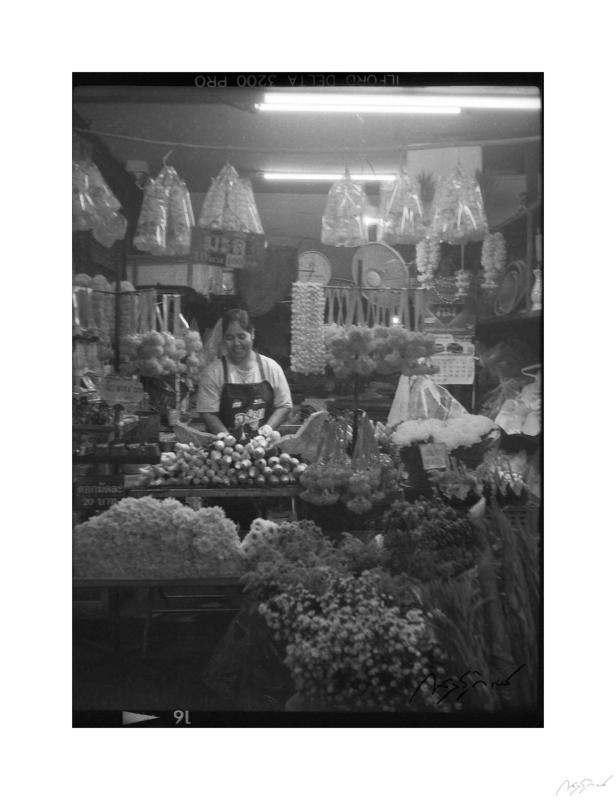
Sample Photo 003
-
Highlights: Excellent sense of depth and layering. The dense flower arrangement in the foreground leads the eye to the smiling vendor in the mid-ground, framed by hanging garlands in the background. This frame fully utilizes the 4.5x6 cm. medium format's depth rendering.
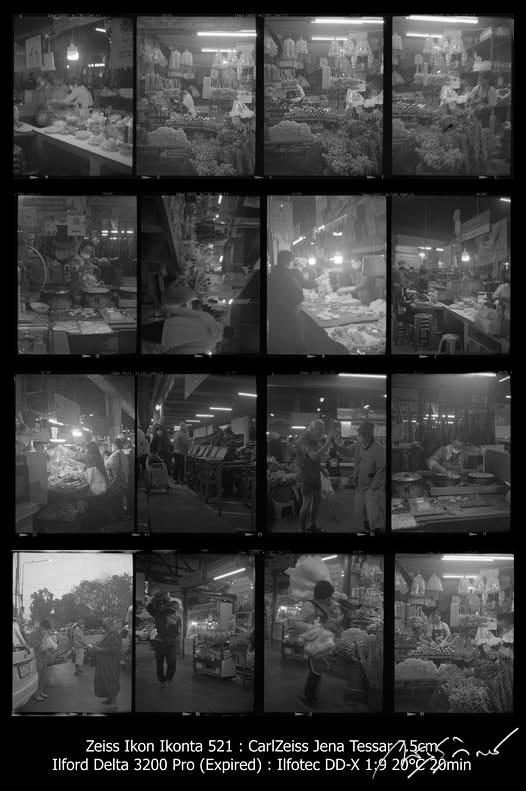
Technical Performance
-
Expired Film & Chemistry Effects:
-
Using expired Ilford Delta 3200 Pro developed in Ilfotec DD-X (1:9) creates a distinct character. The high-speed expired film introduces noticeable base fog, resulting in a low-contrast image where shadows are lifted into medium grays. This yields a soft tonal distribution reminiscent of mid-20th-century historical photographs.
-
-
Carl Zeiss Tessar 7.5cm f/3.5 Lens Performance:
-
Center Sharpness: As seen in Sample Photo 001 (two men greeting each other) and Sample Photo 003 (the florist), the Tessar lens element retains sharp center detail. Clothing textures, skin features, and floral details remain clear despite the heavy grain of the high-speed film.
-
Glow & Halation: As an uncoated pre-war lens, exposure to indoor fluorescent market lights produces visible halation and soft glow around light sources, adding an authentic vintage charm.
-
-
Zone Focusing Accuracy:
-
Operating without a rangefinder in low-light conditions—requiring wide apertures and slower shutter speeds—presents a considerable challenge. However, the focus accuracy across these frames demonstrates strong skill in scale distance estimation.
-
Summary
Rather than pursuing digital-era sharpness, this series demonstrates how to maximize the character of vintage hardware within challenging conditions (expired high-speed film in low ambient light). The soft tonal range, pronounced film grain, and characteristic lens glow complement the street documentary style, producing timeless and narrative-rich imagery.

Comments powered by CComment